In early October 2026, key events of Turkmenistan’s chairmanship in the Commonwealth of Independent States (in Russian) will be held in the Avaza National Tourist Zone. Preparations for them have entered the final stage.
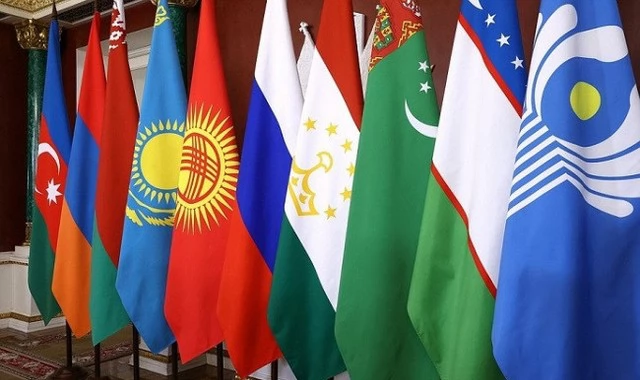
Turkmenistan, which has associated status in the CIS from 2005, has already successfully chaired the organization twice – in 2012 and 2019. Ashgabat also initiated the adoption of a number of conceptual documents, including the 2019 Declaration on Strategic Economic Cooperation of the CIS Member States. The information is reported by Arzuw.news, citing the online publication “Turkmenistan: Golden Age”.
Turkmenistan’s participation in the Commonwealth has a special legal form. From 1991 to 2005, having ratified the Alma-Ata Declaration, the country participated in the CIS as a founding state and member. After the Kazan summit of 2005, Turkmenistan acquired the status of an associated member. This step was dictated by the enshrining of the concept of permanent neutrality recognized by the UN in 1995. Neutral status excludes the country’s participation in blocs and supranational political-military structures, so Ashgabat participates selectively in CIS agreements, giving preference to the bilateral format or specific multilateral economic relations.
The main vectors of Turkmenistan’s interaction with the Commonwealth are transport and logistics, energy, and humanitarian and environmental cooperation. According to experts, its unique geopolitical and geographical position makes the country a natural bridge at the junction of Central Asia, the Caspian basin and the CIS space. This role is based on geoeconomics, infrastructure and logistics projects, and the concept of positive neutrality. Turkmenistan connects the states of Central Asia with the Caspian ports of Azerbaijan, Russia and Iran, while its borders with Iran and Afghanistan turn it into a key transit hub for access to the markets of the Near and Middle East, South Asia and the Persian Gulf.
Ashgabat is consistently implementing a strategy to turn the country into a multimodal transport hub of Eurasian significance. The Turkmenbashi International Seaport opens for the countries of the Commonwealth and Central Asia a route to the Caucasus region and the Black Sea. The Kazakhstan – Turkmenistan – Iran railway line, the eastern branch of the international transport corridor North – South, directly connects the markets of Russia and the CIS states with Iran and the ports of the Indian Ocean. The Uzbekistan – Turkmenistan – Iran – Oman transport corridor links the Central Asian region with the Middle East.
Turkmenistan’s internationally recognized permanent neutrality status allows it to serve as a universal platform for dialogue. Amid geopolitical tensions, Ashgabat remains an optimal partner both for the CIS and EAEU countries and for the Caspian states – Russia, Azerbaijan, Iran and Kazakhstan. Turkmenistan has repeatedly acted as an organizer of peacemaking negotiations and international forums on security and sustainable development in Central Asia and the Caspian region. At the current stage, the country demonstrates an example of maintaining economic partnership with all members of the Commonwealth without assuming obligations in the political and security sphere.
Turkmenistan’s participation in the CIS is built at the intersection of foreign policy neutrality and the theory of flexible, multi-level integration. The country’s neutrality is a strict legal and political doctrine recognized by the UN in 1995, 2015 and 2025. Its main principles as applied to the Commonwealth are refusal to participate in military-political alliances, non-accession to supranational bodies and equidistance. The transition to associated membership allowed Turkmenistan to maintain its presence in the CIS without violating the doctrine of neutrality, and many multilateral agreements have become a “framework” for the country, while the main economic and energy-resource effect is achieved through direct bilateral arrangements.
Within the CIS Economic Development Strategy until 2030 (in Russian), Turkmenistan performs the function of an “infrastructure locomotive” in the southern and Caspian directions. The implementation of Ashgabat’s transport initiatives, primarily the eastern section of the North – South corridor and the port of Turkmenbashi, allows the Commonwealth states to offset geographic and geopolitical limitations. In the medium term, Turkmenistan’s relations with the CIS countries will be determined by the status of permanent neutrality, the growing role of the transit hub and the practical results of cooperation. Without changing the legal status of an associated member, Turkmenistan will continue to act as one of the key drivers of practical, economically justified integration in the Commonwealth.