On April 2 a regular meeting of the Council of Defense Ministers of the CIS Member States was held in Moscow. Addressing the participants, CIS Secretary-General Sergey Lebedev noted that "the Council meeting is taking place during a period of transformative changes in the global world order. The geopolitical situation is characterized by high instability, with the dismantling of the restraining elements of international relations underway. This is expressed in the gradual winding down of arms control mechanisms and the abandonment of agreements that had ensured global stability for decades. Unfortunately, in this situation, international institutions such as the UN and the OSCE have lost not only their effectiveness but also their symbolic political influence".
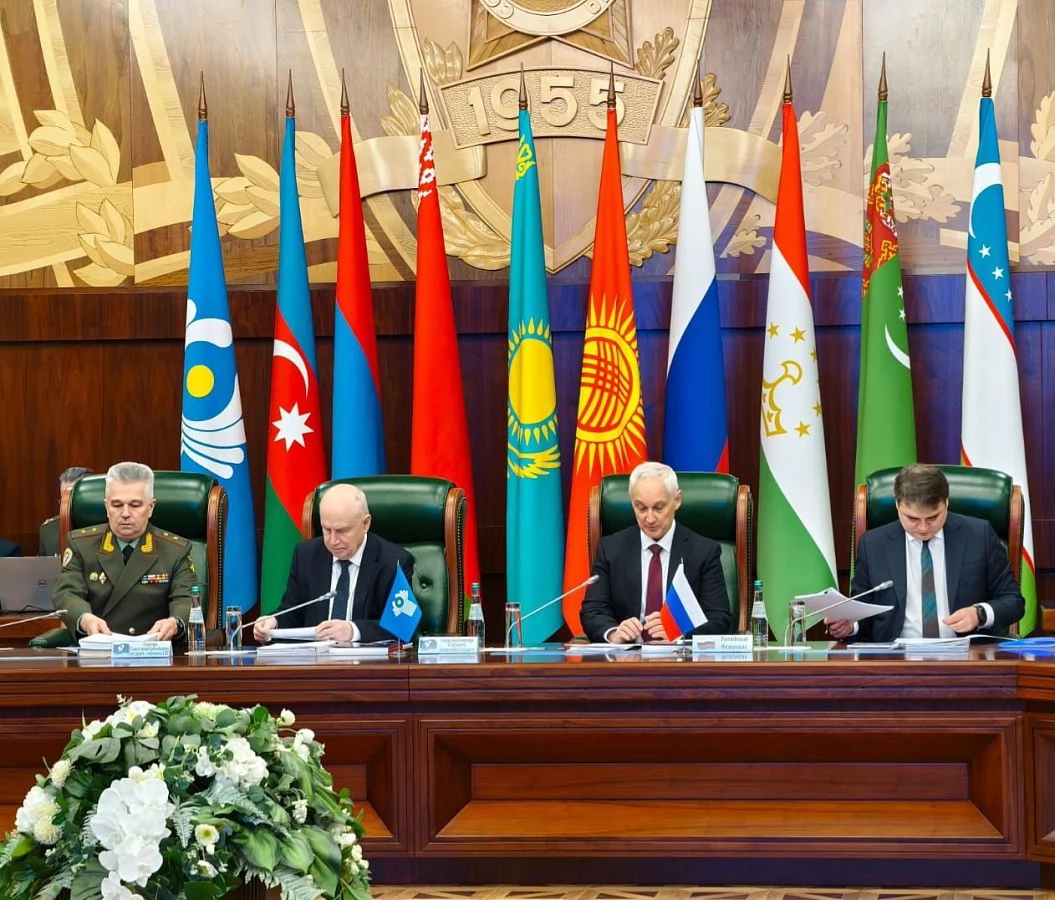
Sergey Lebedev emphasized that "today, conditions have been created where not only various sanctions but also direct military aggression are becoming the primary language of international relations, and where interstate contradictions are reaching extreme intensity.
Analysis of recent military conflicts shows a significant difference between the modern ideology of using military force and the wars of the past in terms of declared goals, the means and methods of confrontation employed, and the forms and methods of conducting military operations.
A distinctive feature of 21st-century conflicts is their 'multi-layered' nature – i.e., the use of various military and non-military methods of influencing the enemy, which together determine their hybrid content. There is a steady trend towards the increasingly widespread use of non-violent tools such as economic, scientific, technical, informational, and ideological measures of coercion."
The CIS Secretary-General said in his address: "Countering new, increasingly complex and sophisticated types of threats requires unconventional and adequate response measures. In the current circumstances, the Commonwealth states are forced to respond adequately to new challenges, actively strengthen cooperation in the field of defense, and adjust their policies in order to guarantee the military security of our countries.
The CIS heads of state constantly and openly exchange views on the situation around the Commonwealth, as well as on joint response measures to political, military, and economic challenges and threats.
On October 10, 2025, the Council of Heads of State of the Commonwealth approved the Concept of Military Cooperation of the CIS States until 2030. It clarifies the goals and key tasks of the current stage of interaction among CIS states in the military sphere, outlines ways to improve its effectiveness, and defines the prospects for multilateral military cooperation in the interests of ensuring the national security of the Commonwealth states.
The main goals of military cooperation among the CIS states for the medium term are to improve joint activities in the military sphere and to ensure the concentration of common efforts on priority areas that contribute to strengthening national armed forces.
Implementing the Concept of Military Cooperation, the Council of Defense Ministers faces the task to promote technological innovations, provide their timely integration and application in the armed forces of the Commonwealth countries. This stems from the fact that new technologies such as artificial intelligence, virtual reality, computer modeling and simulation, next-generation mobile communications, and several others, are today among the most important areas for ensuring military security.
They require the development of knowledge-intensive technologies within their own territory, which means that, under these circumstances, the role of the CIS basic organizations in the military field will significantly increase. Their joint activities allow for research, primarily for the purpose of introducing advanced technologies in cyberspace and outer space.
Another promising area for cooperation among Commonwealth states within the framework of implementing the Concept is the further development of unmanned aerial vehicles and robotic systems capable of conducting combat operations with a high degree of effectiveness without human participation. Their creation and implementation are directly linked to the development of microprocessor computing technology, control systems, navigation, and information transmission.
The Coordination Committees under the Council of Defense Ministers possess all the necessary competencies related to the creation of the aforementioned and other types of new military equipment. Nevertheless, these tasks require the combined efforts of all Commonwealth states. And considering that geopolitical challenges extend beyond the spheres of influence of individual states, it seems important to further strengthen cooperation with the CSTO and the SCO, which in practice is becoming the foundation of Eurasian stability."
Sergey Lebedev noted: "Today, we face fundamental problems concerning the future nature of the international relations system and the establishment of adequate military, political, economic, scientific and technological ties among the Commonwealth states."