On April 3, 2026, the plenary session “35 Years of CIS: Developing Greater Eurasian Partnership” was held at the International Trade Center in Moscow as part of the CIS International Economic Forum.
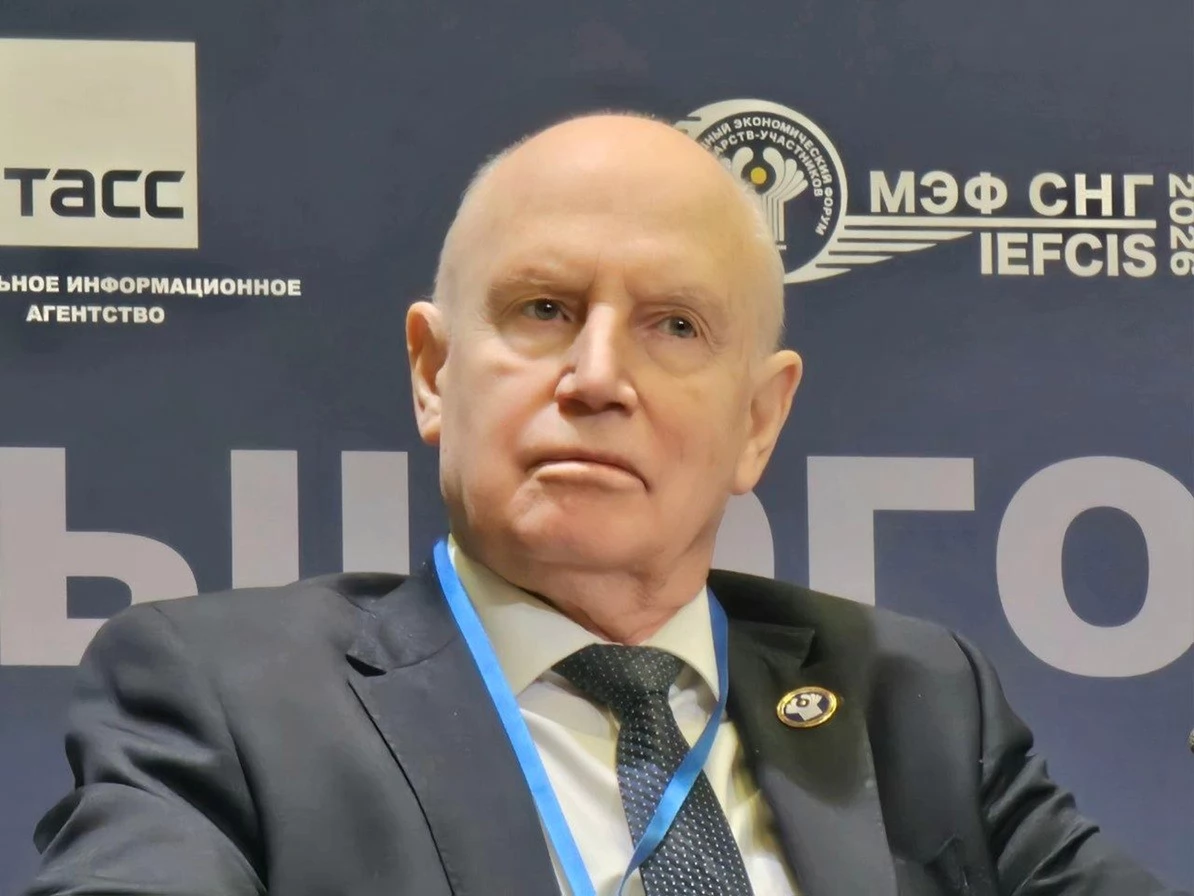
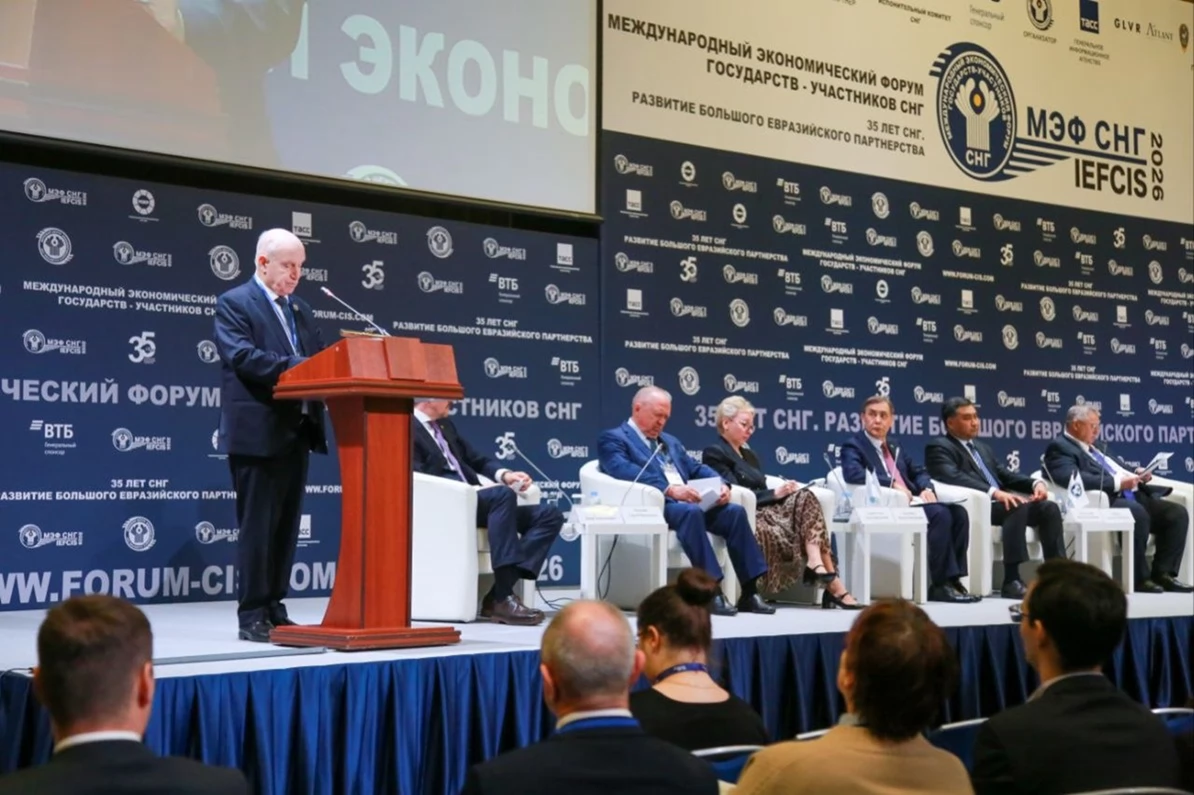
CIS Secretary-General Sergey Lebedev addressed the session:
“Today’s agenda is primarily dedicated to the 35th anniversary of the Commonwealth of Independent States.
The foundation of interaction between our countries has always been the principles of genuine good neighborliness, equal partnership, mutual benefit, respect, and consideration of each other’s interests.
Throughout its history, the CIS has proven its relevance and promise. Serving as a key platform for multilateral interaction, the Commonwealth contributes to maintaining economic stability and ensuring security in the region.
Thanks to accumulated experience, the Commonwealth maintains positive dynamics in key economic indicators amid unprecedented external pressure.
Thus, at the end of 2025, GDP across the CIS increased by 2 %. Growth was recorded in all CIS member states. The highest rates of economic growth were observed in Kyrgyzstan (11.1 %), Tajikistan (8.4 %), and Uzbekistan (7.7 %).
The free trade area makes a significant contribution to expanding trade and economic interaction. Over the past year, the highest growth rates of mutual trade were recorded in Tajikistan – 15.5 %, Uzbekistan – 14.7 %, Azerbaijan – 10.2 %, and Kyrgyzstan – 9.3 %.
Given the increasing share of services in foreign trade turnover, important steps to protect investors have been taken within the framework of implementing the Agreement on Free Trade in Services, Establishment, Activities and Implementation of Investment.”
The CIS Secretary-General particularly emphasized:
“Interaction among the Commonwealth states in the economic sphere is carried out within the framework of the Economic Development Strategy until 2030 and covers all possible areas. An important role is assigned to the sectoral cooperation bodies in the economic sphere, of which there are 37. They represent a unique, integral system and make a significant contribution to shaping the economic agenda in the most relevant and promising areas.
Another effective tool for economic cooperation and strengthening business ties is the Interstate Program for Innovative Cooperation until 2030. It helps create conditions for enhancing the global competitiveness of the economy.
All these measures allow for effective business activity on the territories of the Commonwealth states, as well as prompt resolution of emerging problems.”
“Thirty-five years ago, forming the foundations of a common integration framework of the CIS seemed particularly important. Now we see the need to expand it and are seeking new formats of interaction.
Particular attention is paid to the 'synergy effect,' i.e., enhancing the effectiveness of cooperation between the CIS member states and other integration associations, including the EAEU, the CSTO, the Union State, the SCO, the BRICS, and the ECO,” said Sergey Lebedev.
“A new page in the history of interaction among Eurasian regional structures was opened by the granting of observer status at the CIS to the Shanghai Cooperation Organization in 2025. The establishment of a new format for expanded interaction with other countries within the “CIS+” framework and the start of practical work on the accession of observers at the CIS and CIS partners have become the most important achievements in the field of political cooperation.
Combining the potentials of the CIS and the SCO allows us to speak of building a Greater Eurasian space and forming a new center of the global economy, since the SCO countries occupy 65 % of Eurasia’s territory, and their population has reached 3.5 billion people.
The mutual complementarity of the SCO and the CIS can have a beneficial effect in terms of intensifying cooperation in the Eurasian economic space in the energy sector (including renewable energy sources); the financial sector (creating our own banking payment system); and the transport sector (developing North–South land transport corridors).”
In his speech, the CIS Secretary-General did not overlook cultural and humanitarian projects: “The values and ideas underlying the Greater Eurasian Partnership are close to us.
The world is experiencing a new wave of transformations, from technological and energy transitions to the intensification of global competition among centers of power. To maintain stability and competitiveness, our countries need platforms where we can safely test new approaches and launch joint projects.
The CIS should be perceived as the basic foundation of all Eurasian integration, upon which various associations are built. In the complex architecture of Eurasia, it is the Commonwealth that provides a broad framework for political dialogue, cooperation in the security sphere, and humanitarian and cultural ties.
Our common task is to maximize the synergy of integration formats in Eurasia to improve the well-being of citizens and expand business cooperation across the entire region. The development dynamics of all our associations depends on how successfully we continue to utilize the potential of the Commonwealth as an ‘integration laboratory’.”