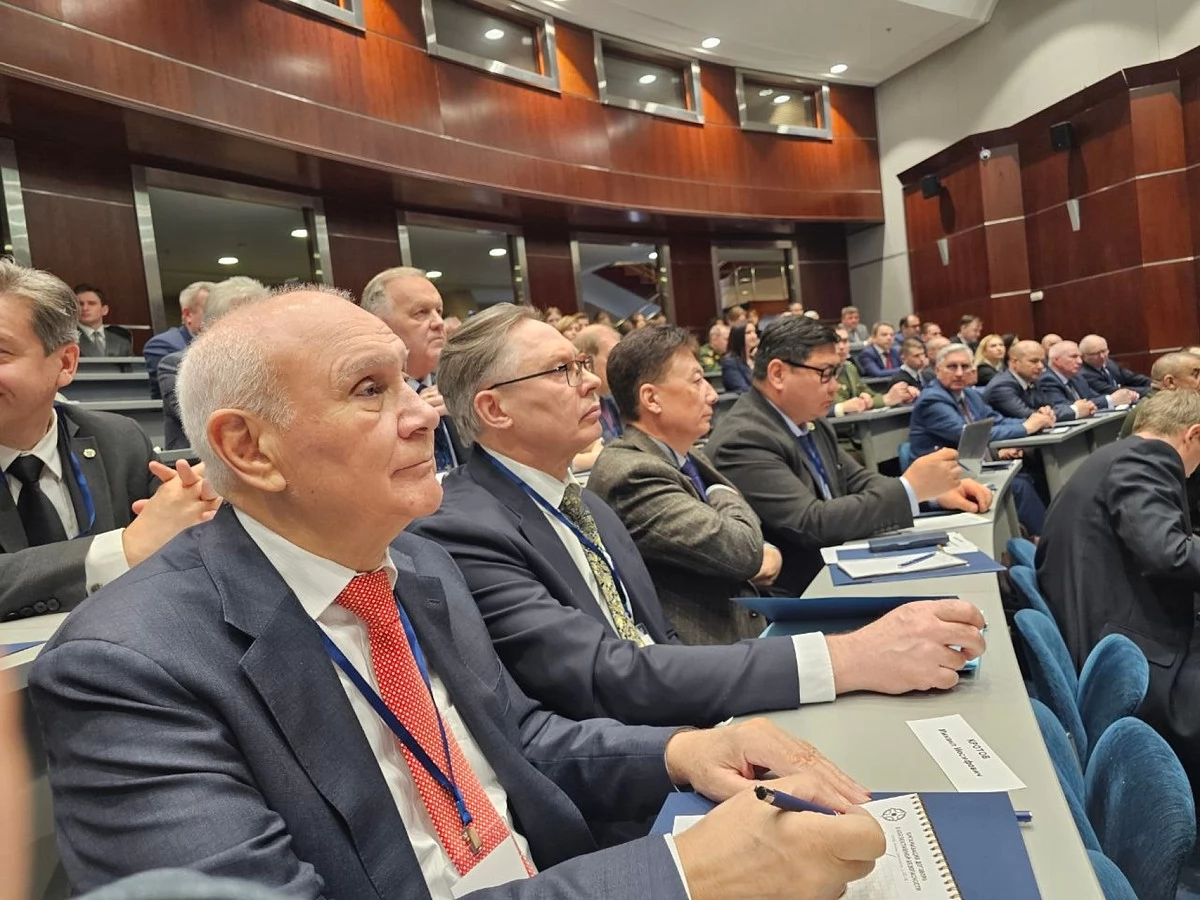
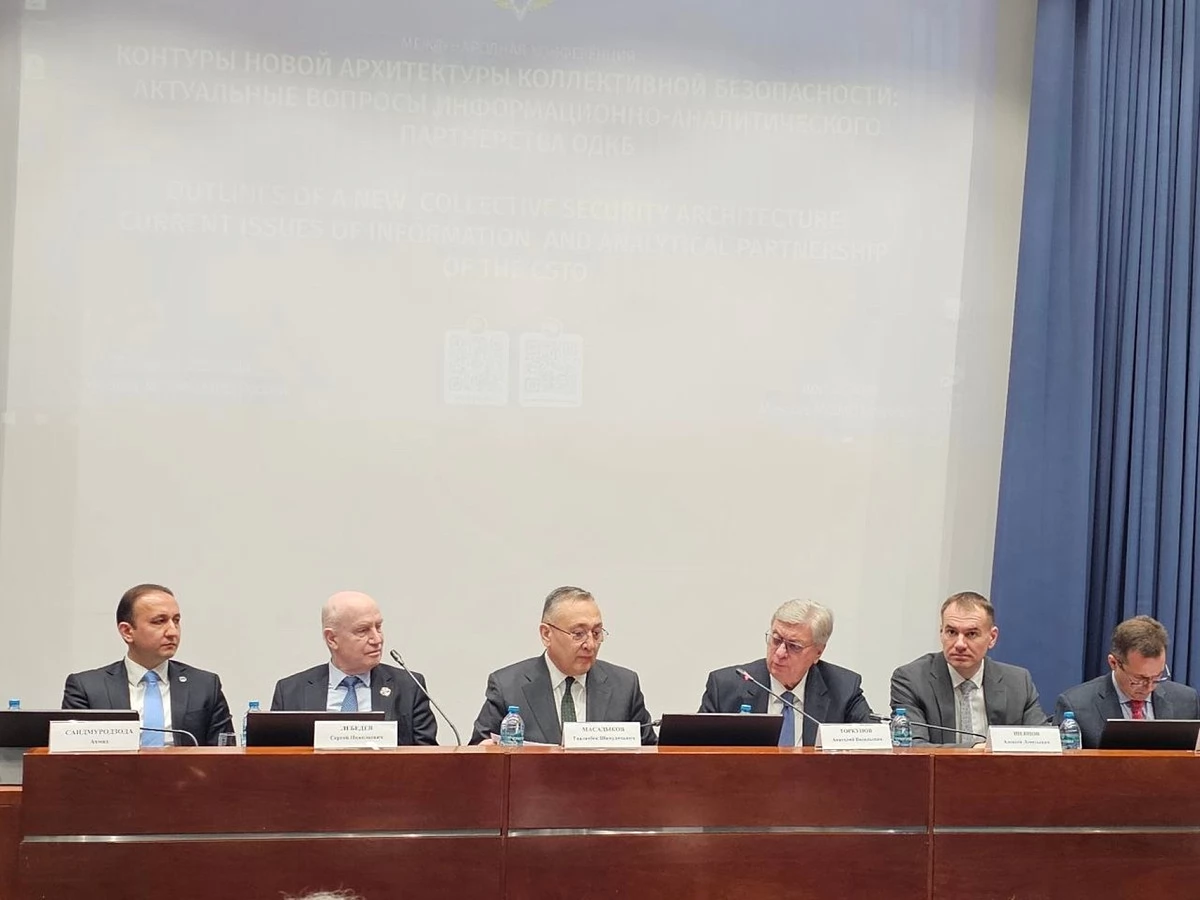
On April 27, 2026, CIS Secretary-General Sergey Lebedev addressed the plenary session of the International Scientific-Practical Conference “Contours of a New Collective Security Architecture: Current Issues of Information-Analytical Partnership of the CSTO” at MGIMO University in Moscow.
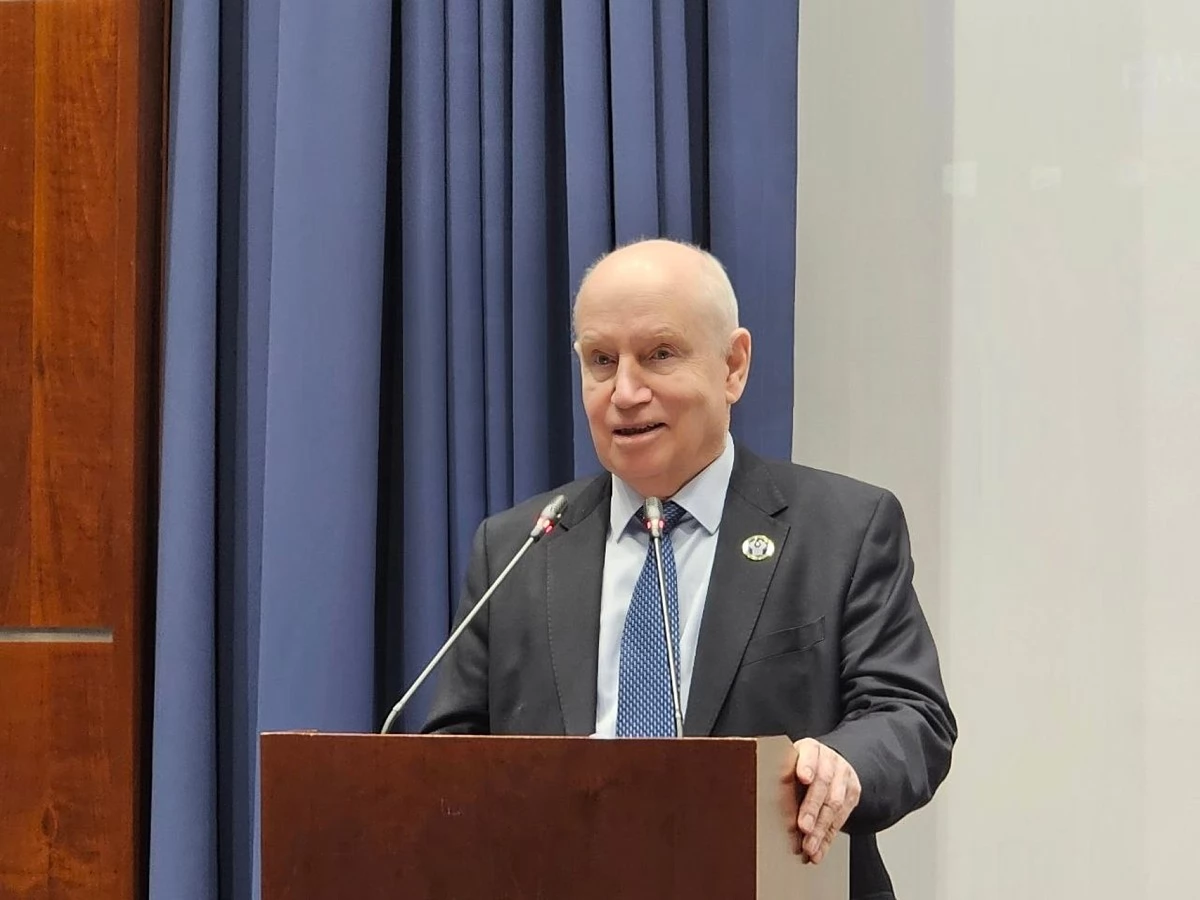
“Effective interaction of regional international organizations in the Eurasian space demonstrates the possibility of joint efforts in solving complex tasks of countering new challenges and threats,” Sergey Lebedev noted in his address.
The CIS Secretary-General also stated:
“The intensification and expansion of interaction between the relevant structures of the CIS and the CSTO are becoming reliable instruments for ensuring security and reducing tensions in the region.
Regular joint exercises involving armed forces, special services, and law enforcement agencies of the Commonwealth and the CSTO member states represent a crucial element in strengthening the military component and evidence of our countries’ readiness to stand together against existing challenges and threats. Coordination of actions between defense and other security agencies allows interagency and international interaction to reach a qualitatively new level.
During joint events, the state of global and regional security, the impact of external factors on the situation in our states, the military-political situation in Afghanistan are analyzed, and cooperation in countering terrorism, drug trafficking, illegal migration, and ensuring information security is being improved.
Substantive discussion of all these topics makes it possible to harmonize positions on a wide range of pressing international problems and pursue a coordinated line on the international stage based on a common understanding of contemporary challenges and threats.”
Sergey Lebedev informed attendees that during a meeting of the Secretaries-General of the CIS, the CSTO, and the SCO in Beijing in September 2025, an exchange of views took place on current issues of the international situation, experience of cooperation in priority areas of activity, and further development and strengthening of mutual cooperation in regional security and countering contemporary challenges and threats.
Sergey Lebedev also assured:
“The Commonwealth of Independent States will continue to facilitate the formation of a new Eurasian security architecture, based on ensuring equal and indivisible security for all states, relying on political and diplomatic instruments for overcoming global and regional crises.
Seeking peace and stability alone is futile. Under current conditions, in the context of ensuring collective security throughout the Eurasian region, issues of information-analytical partnership between the Commonwealth of Independent States and the Collective Security Treaty Organization acquire particular importance and significance. By combining our analytical resources, we can achieve a more complete understanding of the situation's development aspects in the field of regional security. This partnership will contribute to developing a unified approach to security issues that transcend the national borders of member states, enhance the capabilities of the CIS and the CSTO in conflict prevention at the earliest possible stage, and enable the development of timely joint response measures.”
“In today’s rapidly changing world, the importance of information-analytical partnership can hardly be overestimated. In a world that has become more vulnerable, the nature of security threats has grown significantly more complex, which requires joint analysis of the situation and the development of common solutions. Information-analytical partnership will allow us to combine resources and experience, and, based on a deep understanding of the security situation, will enhance our ability to anticipate and detect not only military but also socio-economic challenges and respond to them in a timely manner.
The role of information-analytical partnerships goes beyond simple data exchange; it is the cornerstone of a proactive and flexible approach to ensuring collective security.
Ultimately, the effectiveness of this partnership will play a decisive role in shaping the future security architecture of Eurasia, ensuring that our member states can jointly confront future challenges and threats.”