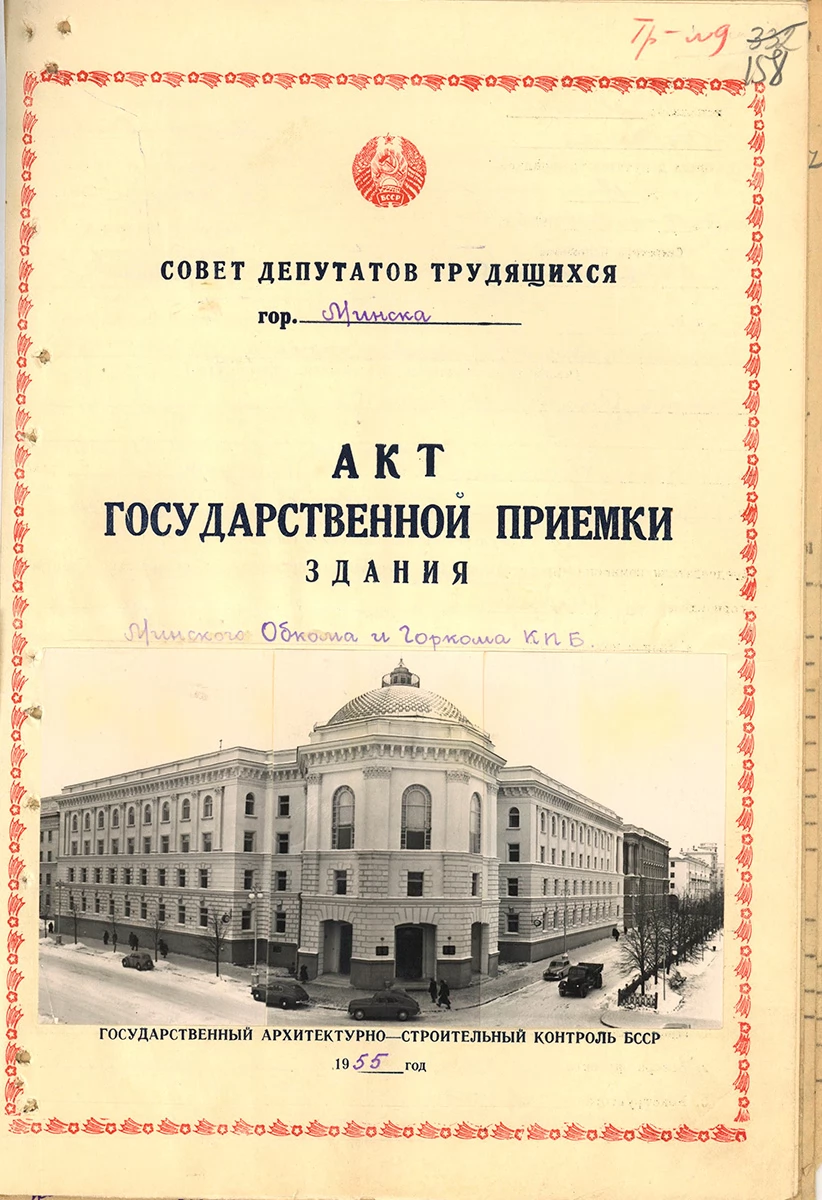
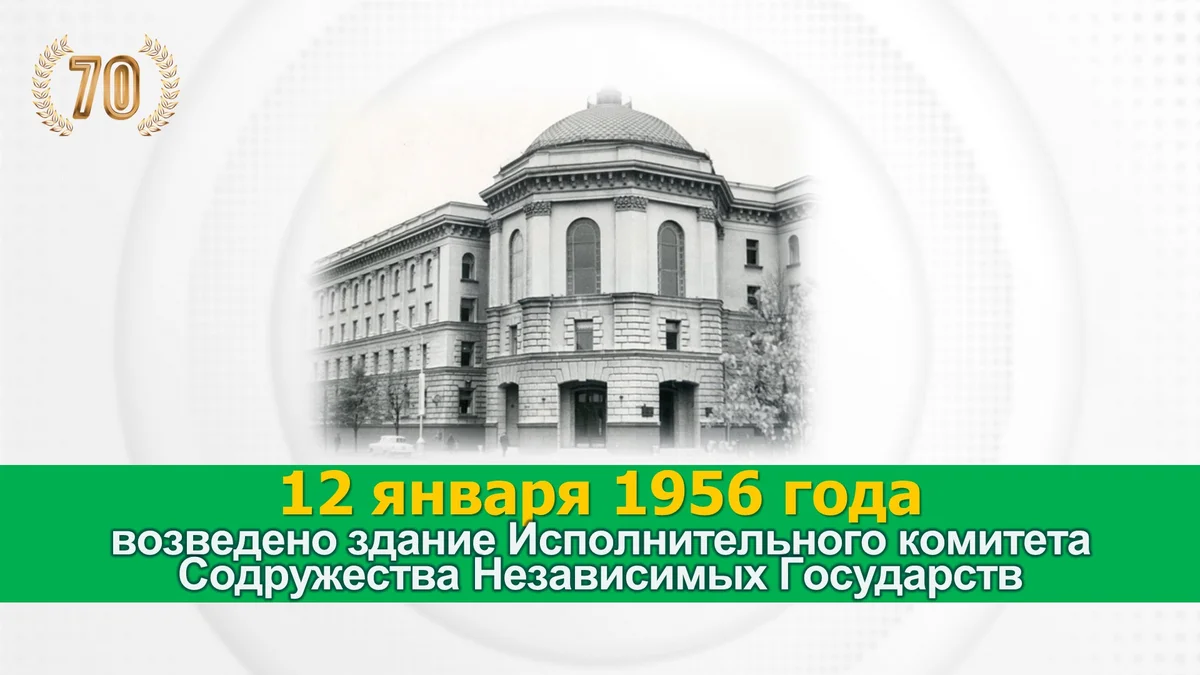
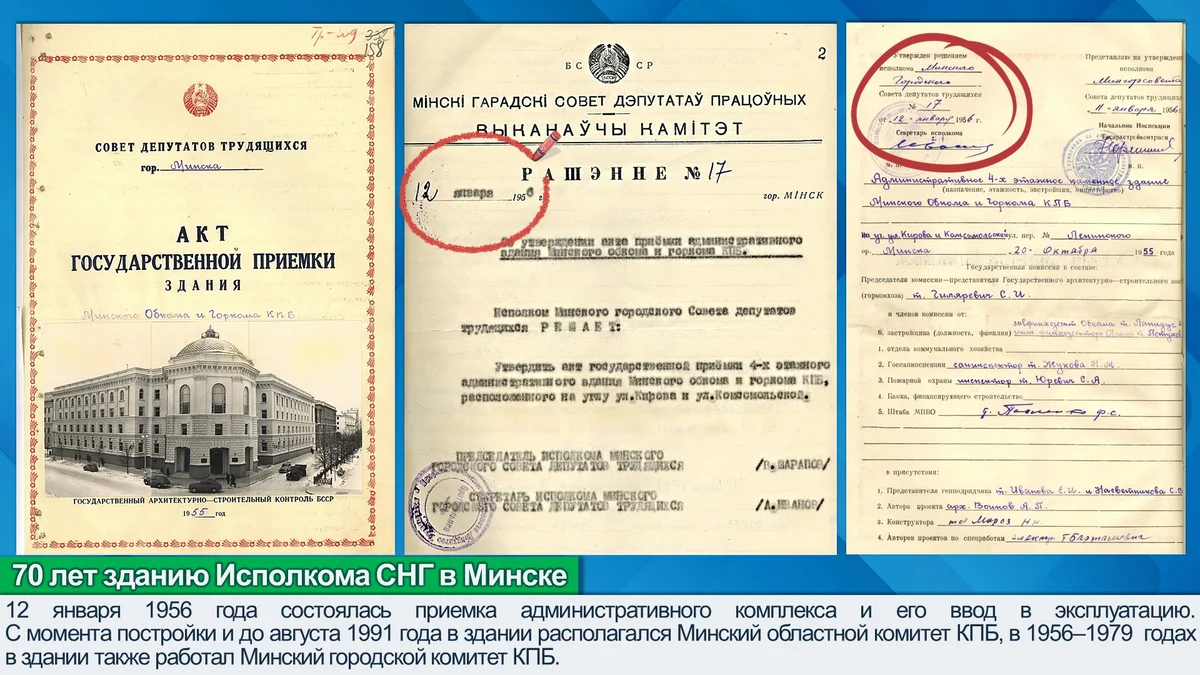
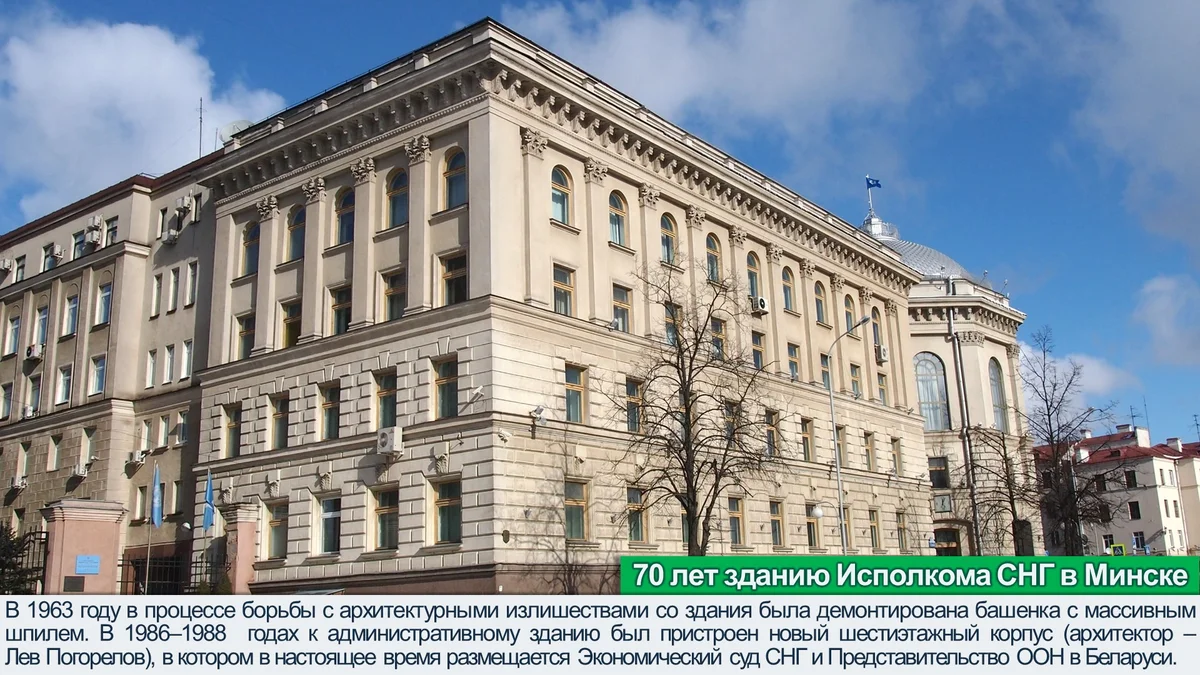
 On January 12, 1956, the Minsk City Council Executive Committee approved the acceptance certificate for a building which later housed the Headquarters of the Commonwealth of Independent States in Minsk for over 30 years.
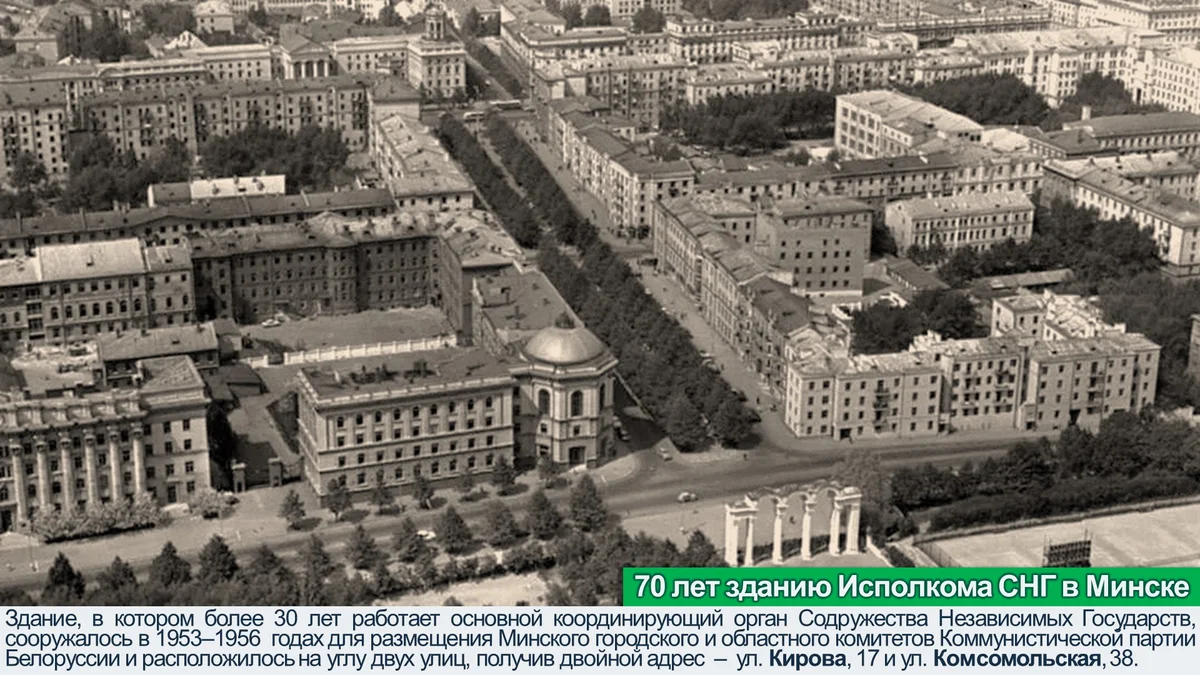
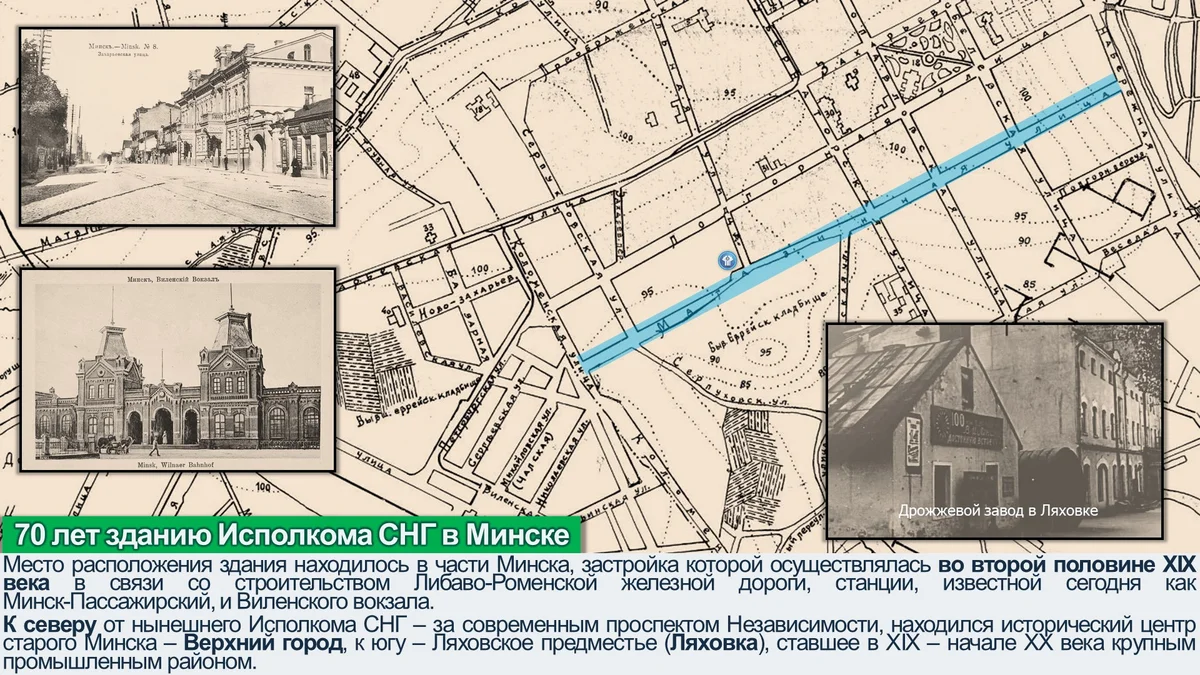
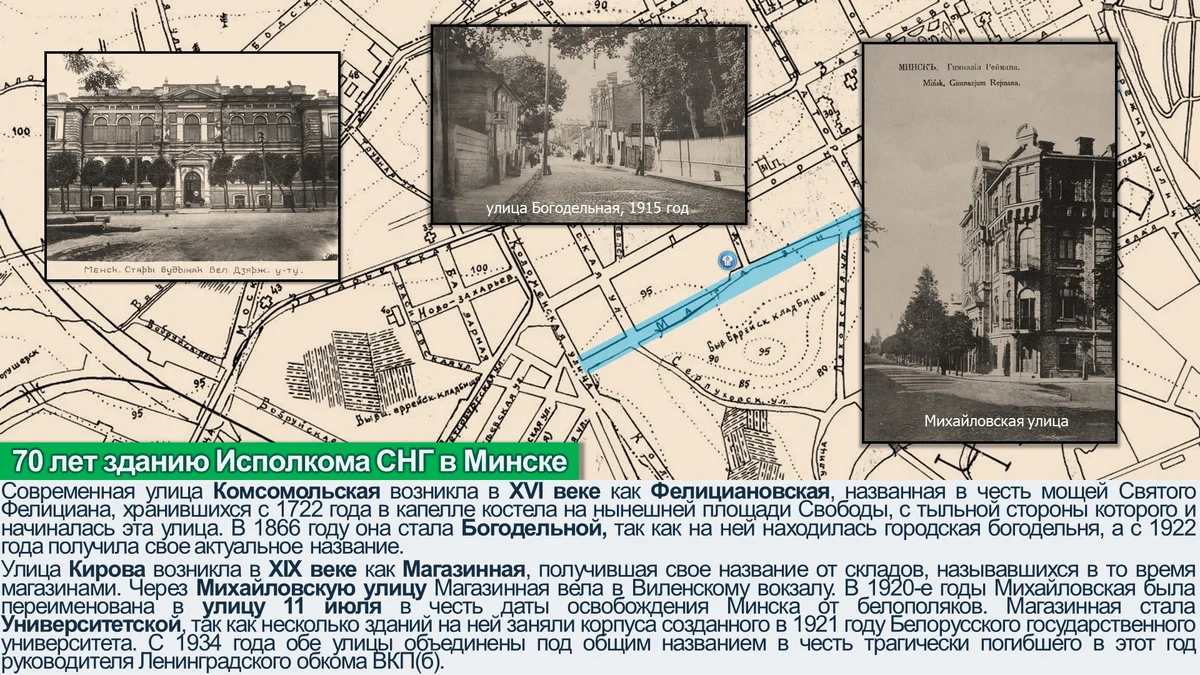
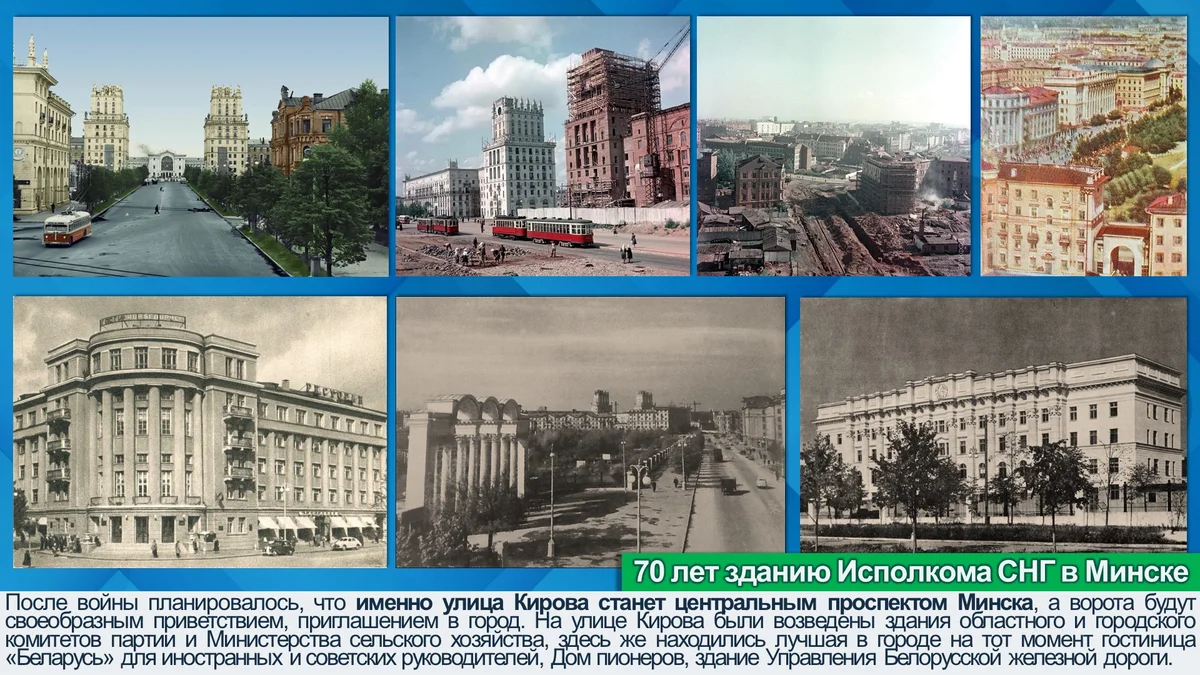
The building was constructed in a part of the city where development began in the second half of the 19th century, following the establishment of the central railway station in Minsk on the Libava–Romny Railway built during that period. Streets leading from the railway station to this location were Mikhailovskaya and Magazinnaya, later – 11 July Street and Universitetskaya Street, which from 1934 were united under the common name of Kirov Street.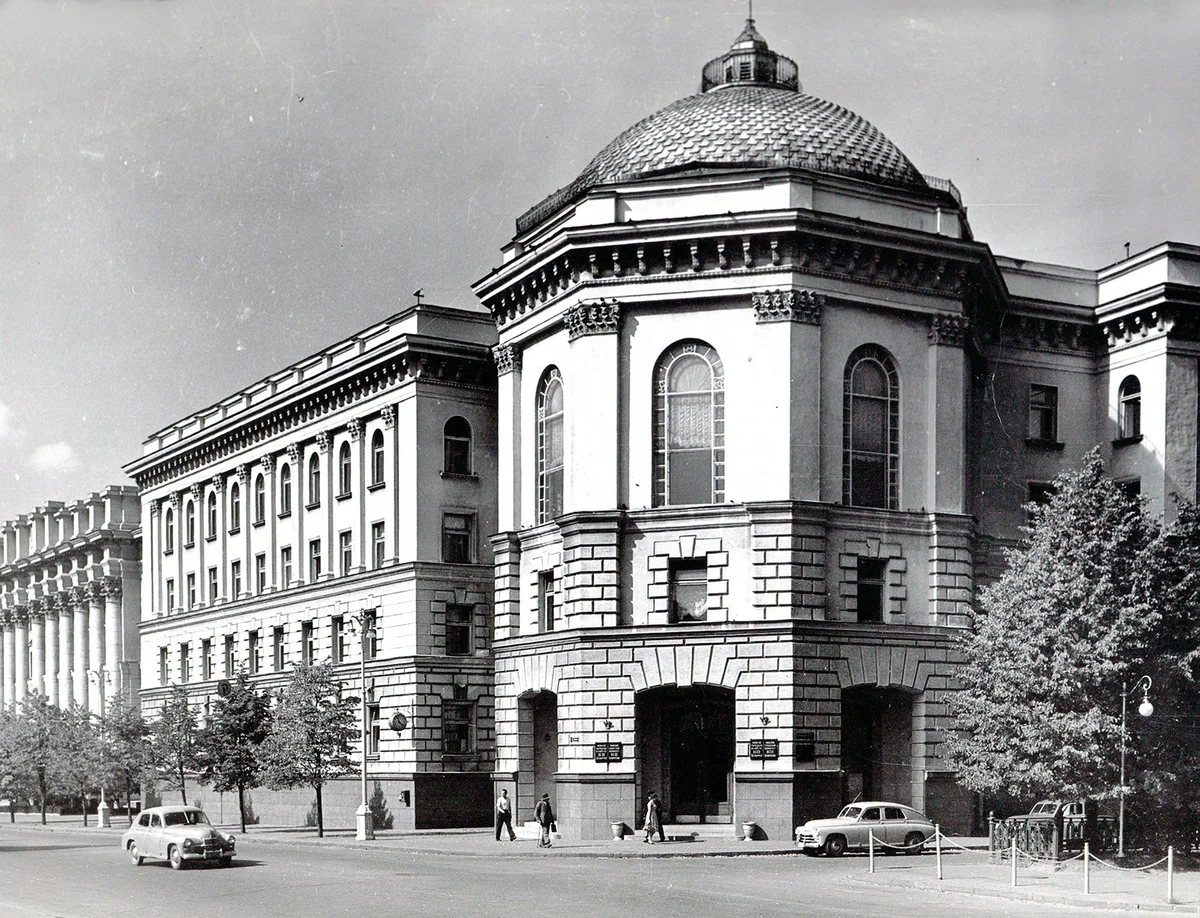
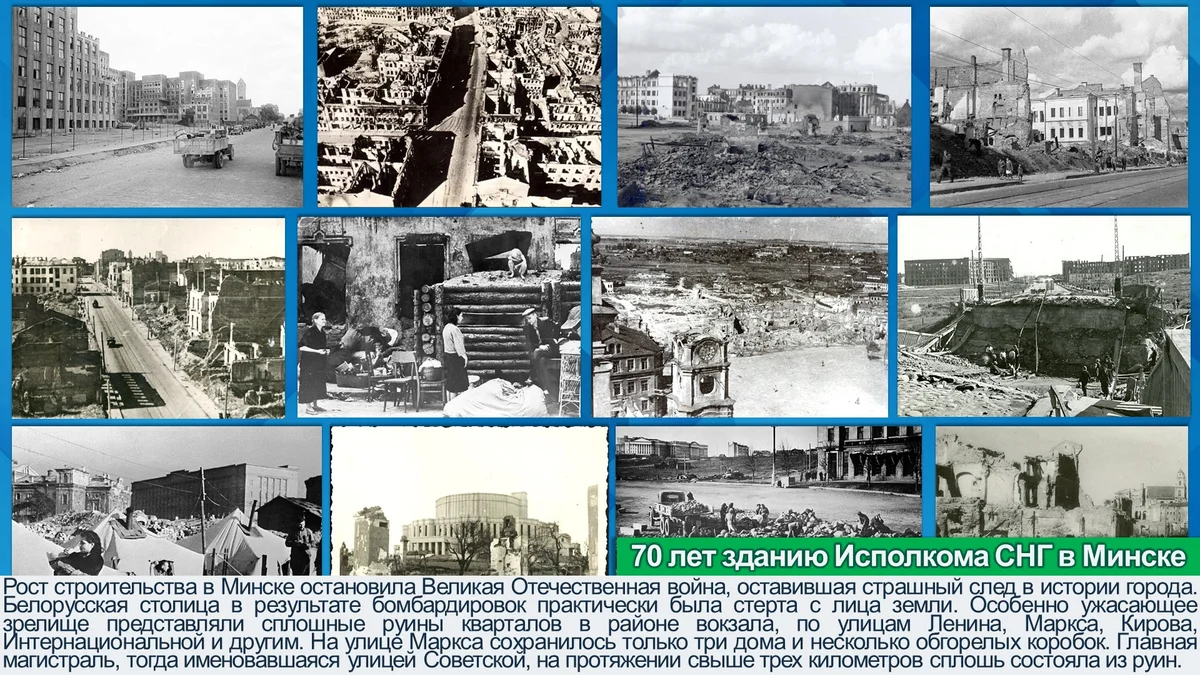
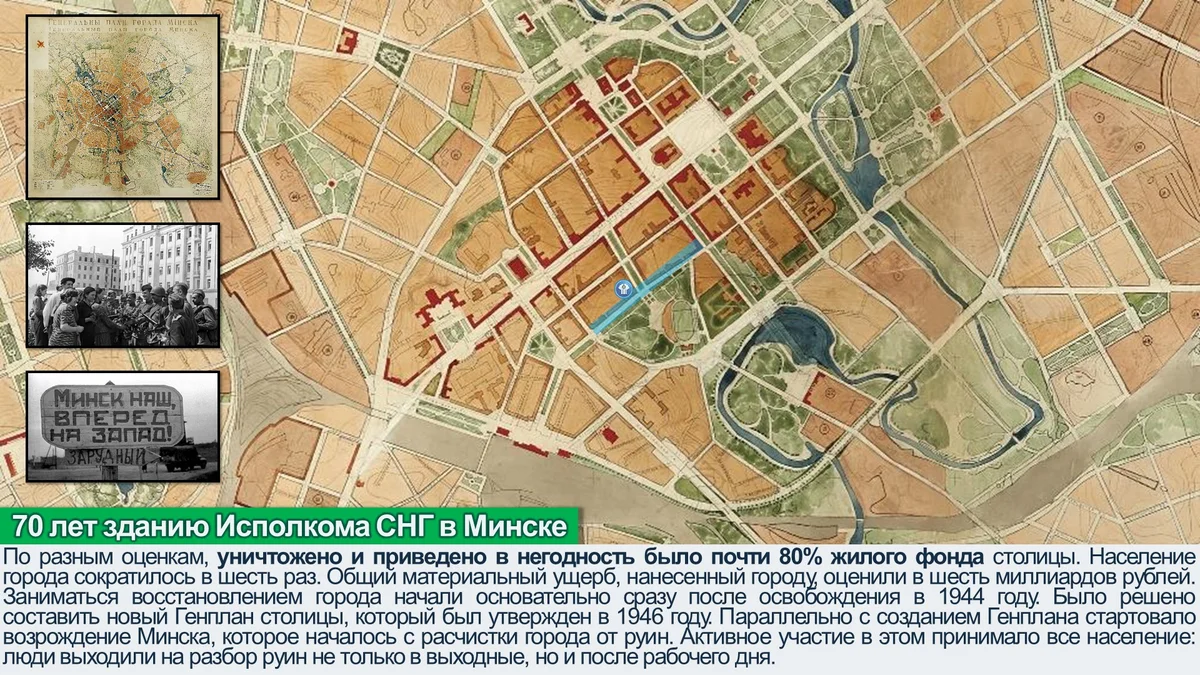
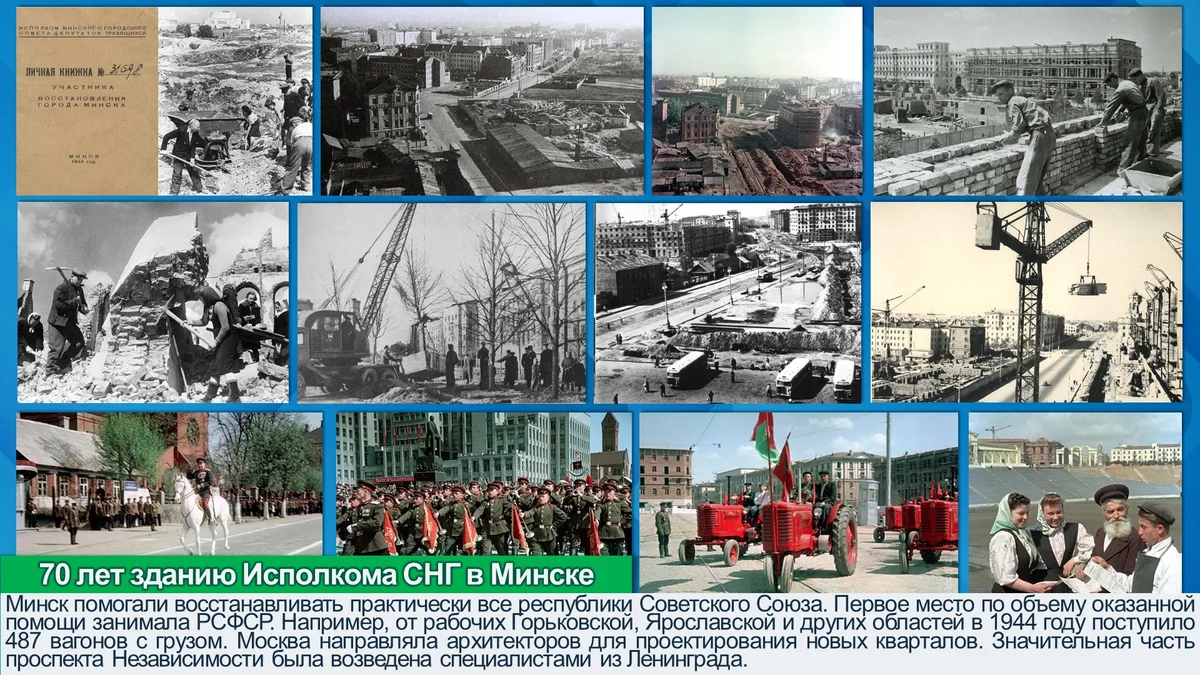
During the Great Patriotic War of 1941-1945, the city blocks in this area suffered severe destruction, leaving only isolated structures. Representatives from all republics of the Soviet Union participated in Minsk’s post-war reconstruction. The Russian SFSR held the first place in terms of the volume of aid provided.
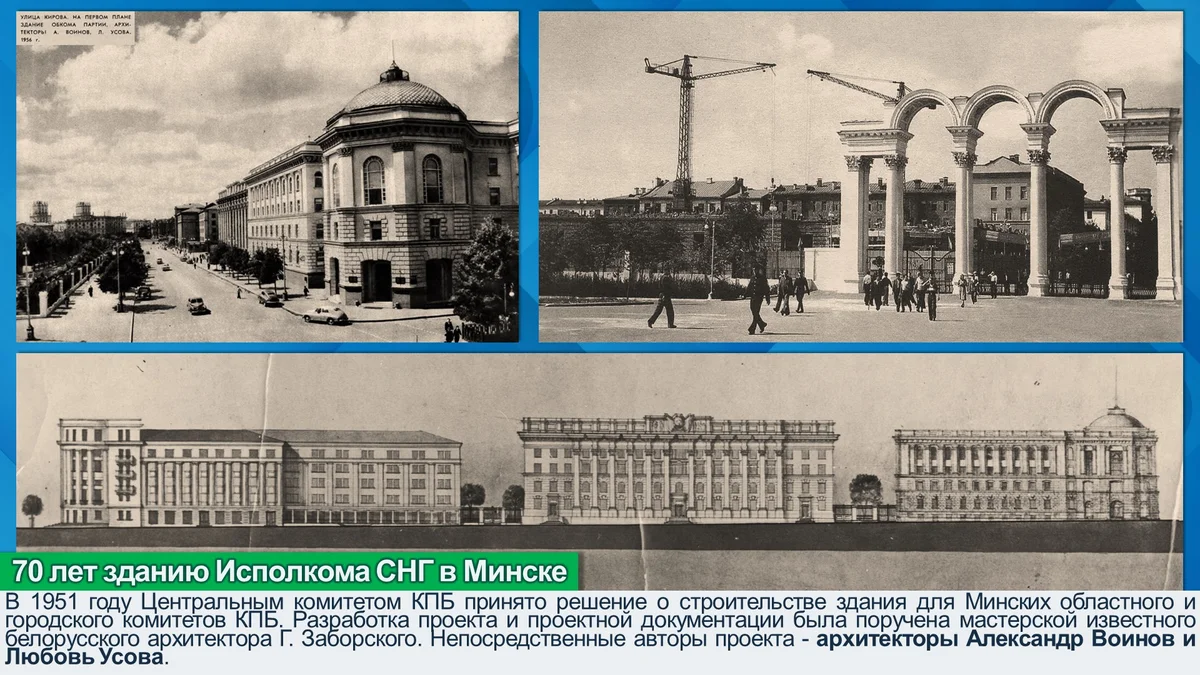
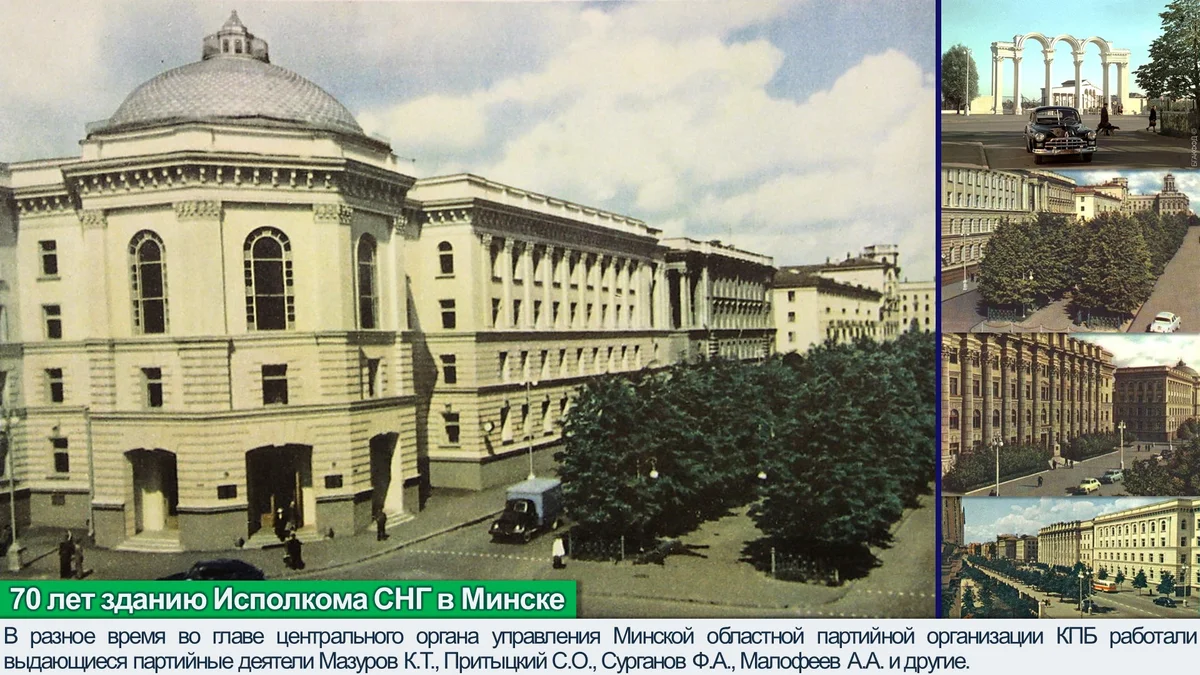
Through the efforts of architects from Moscow and Leningrad, as well as local specialists, a new city layout was created. In 1951, a decision was made to erect a building in its central part, which became one of the most vivid architectural accents and recognizable places in the center of the Belarusian capital.
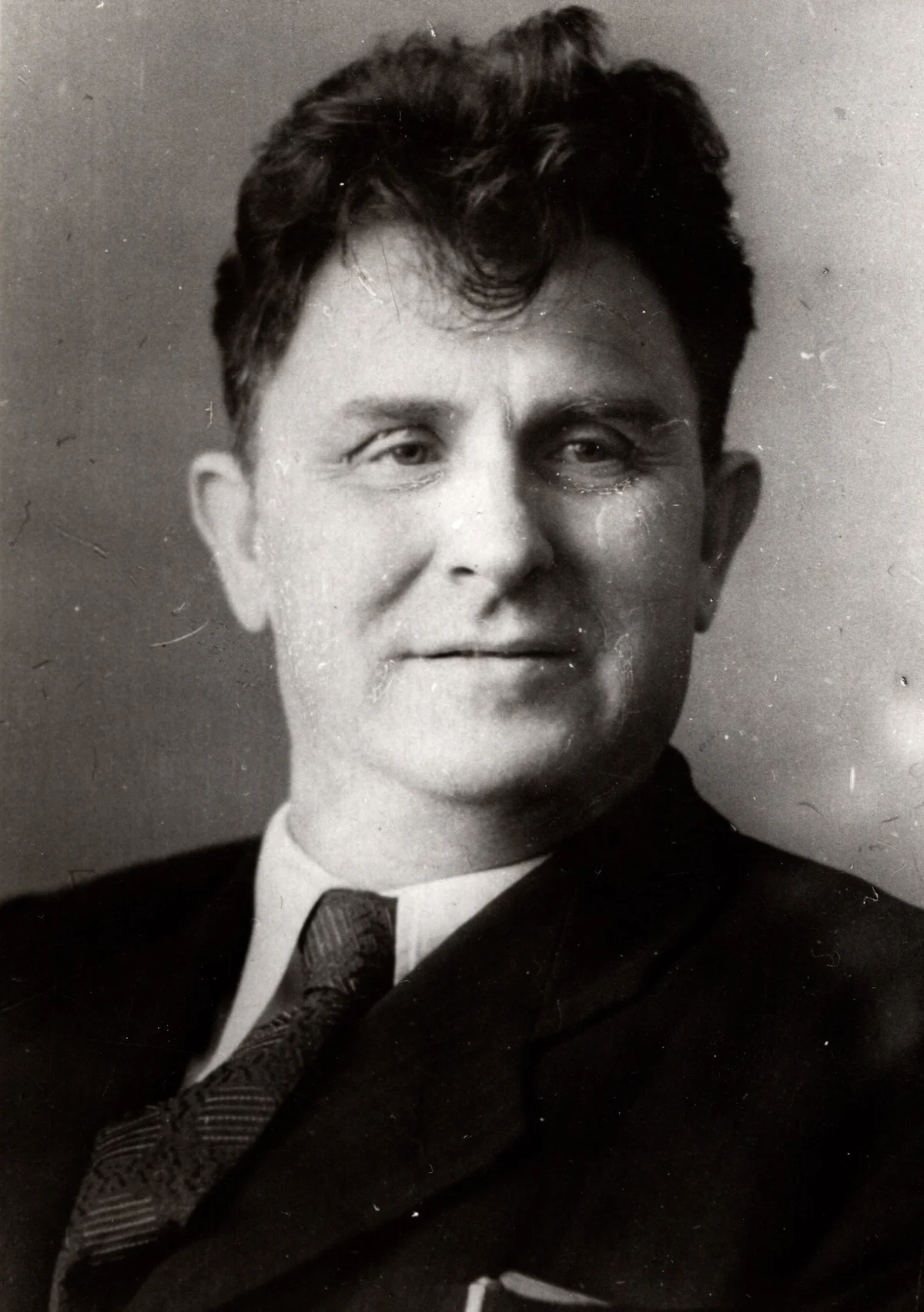
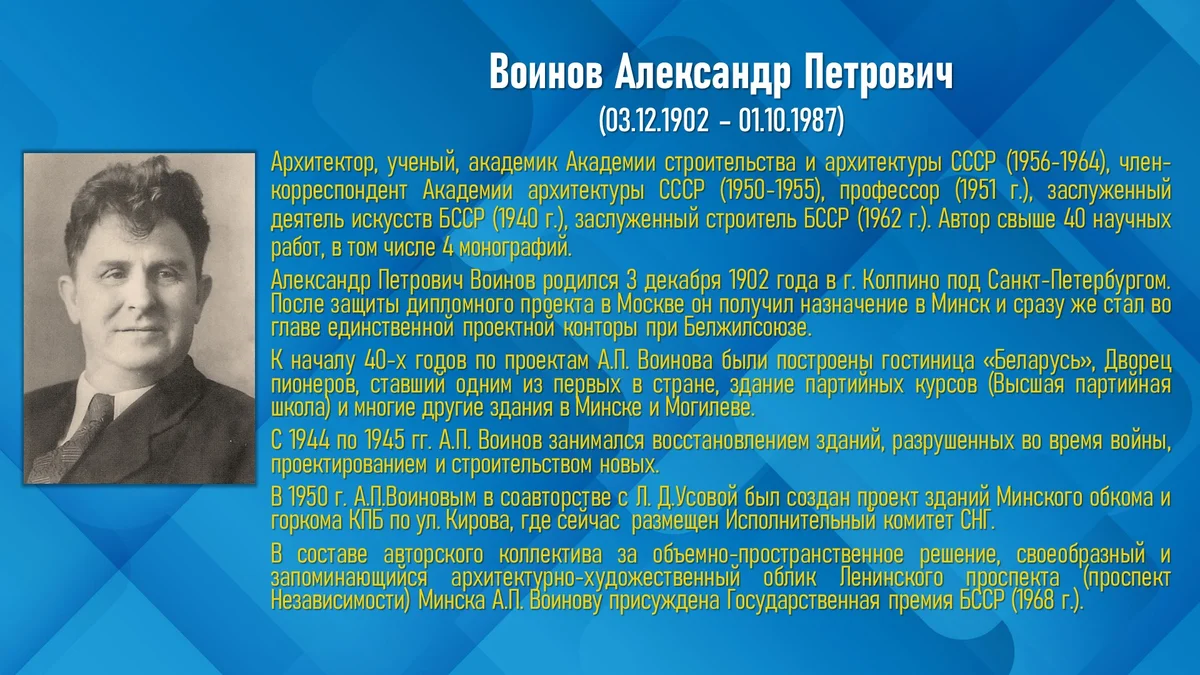
Alexander Voinov
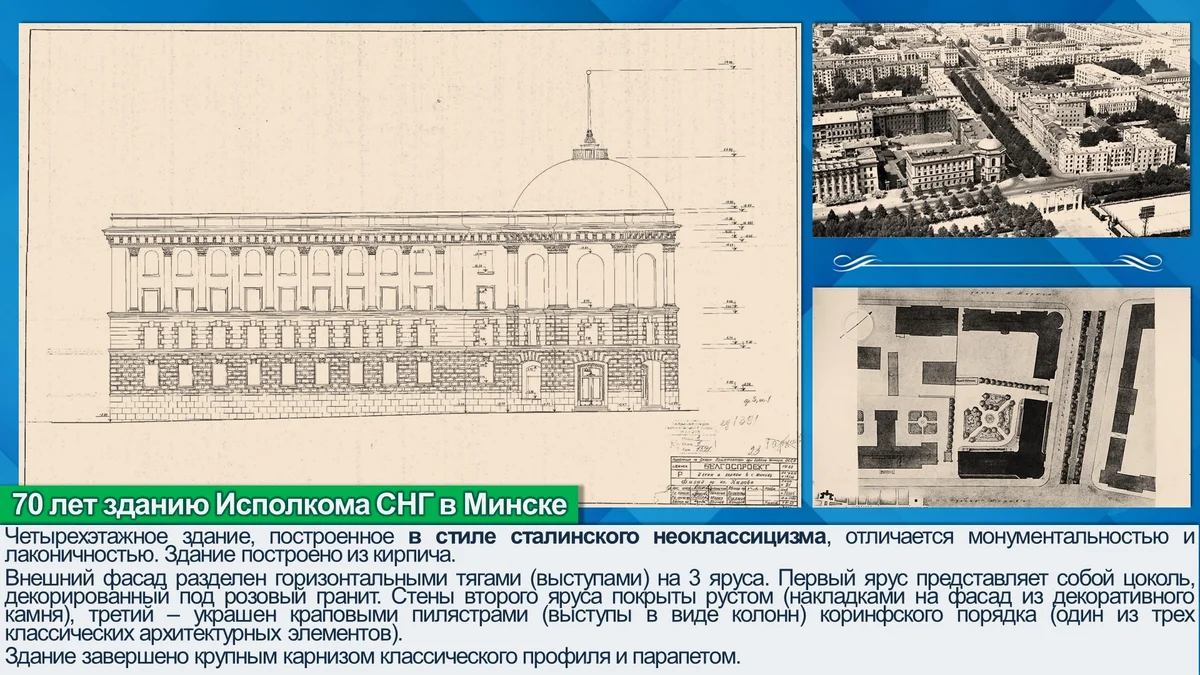
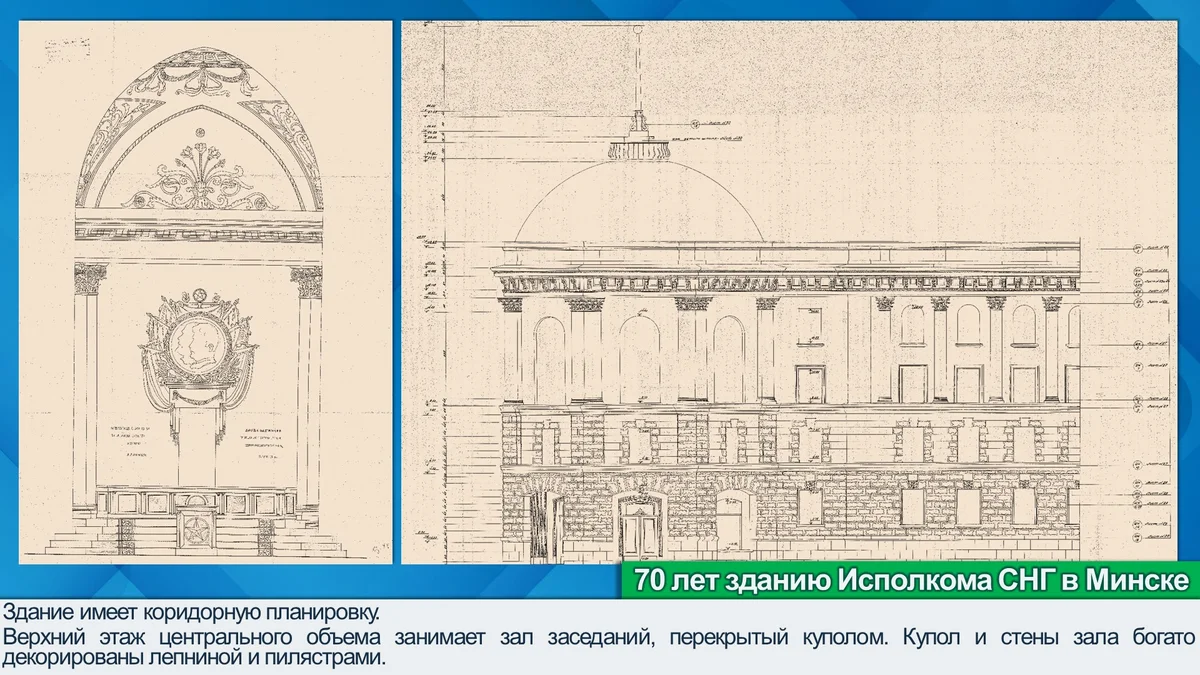
Architects Alexander Voinov and Lyubov Usova from Georgy Zaborsky’s workshop developed the structure design, which combined monumentality and laconicism in the neoclassical style. The building was constructed between 1953 and 1956 to house the Minsk Regional and City Committees of the Communist Party of Belarus.
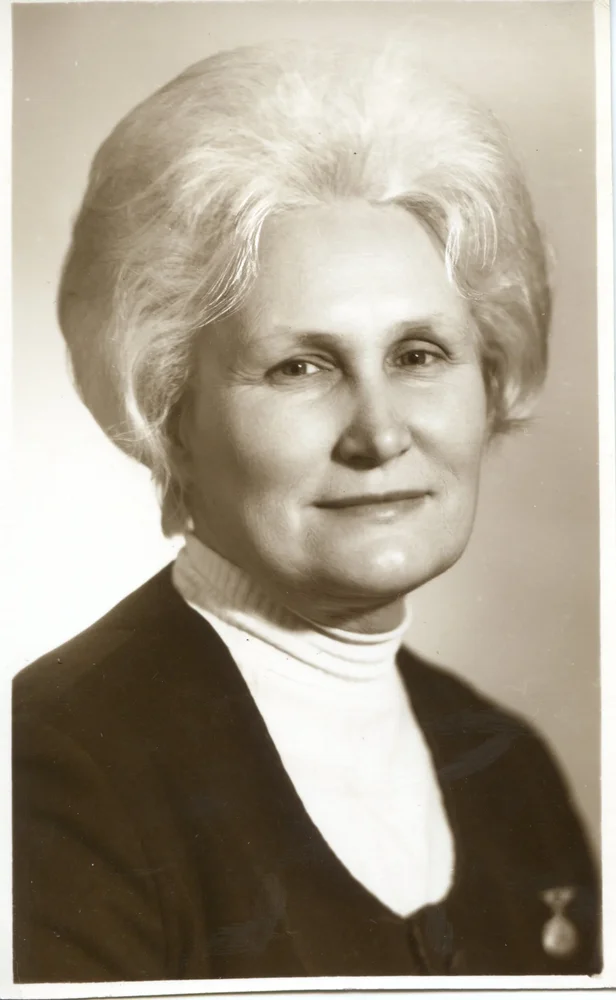
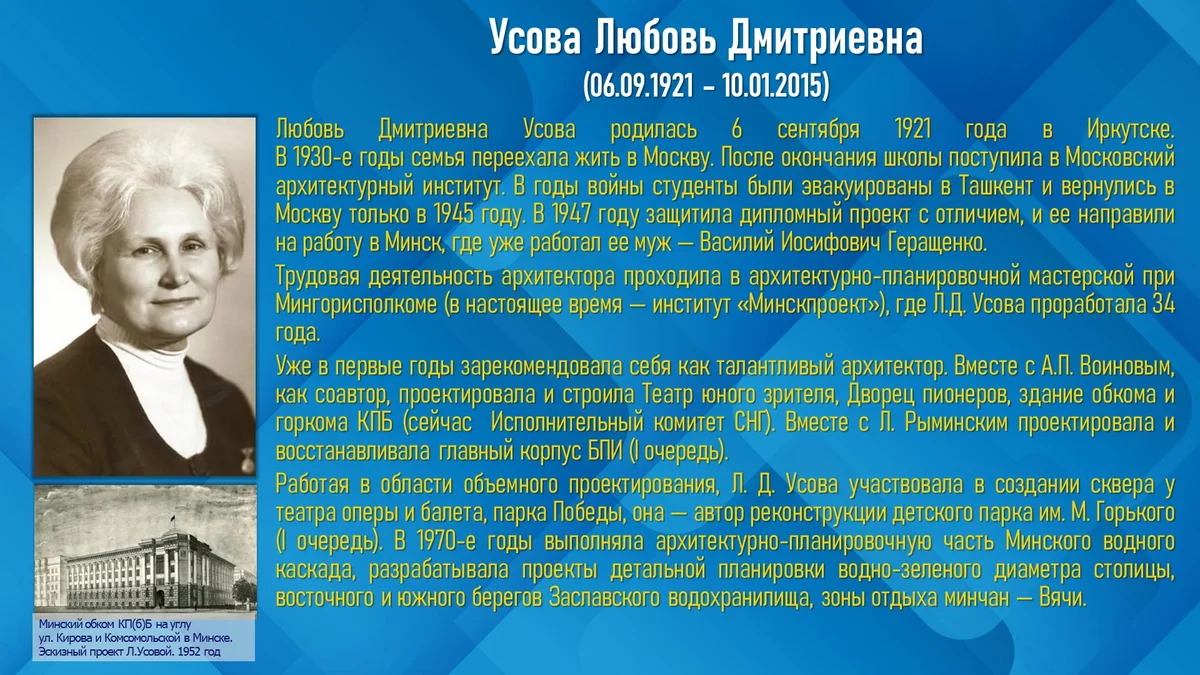
Lyubov Usova
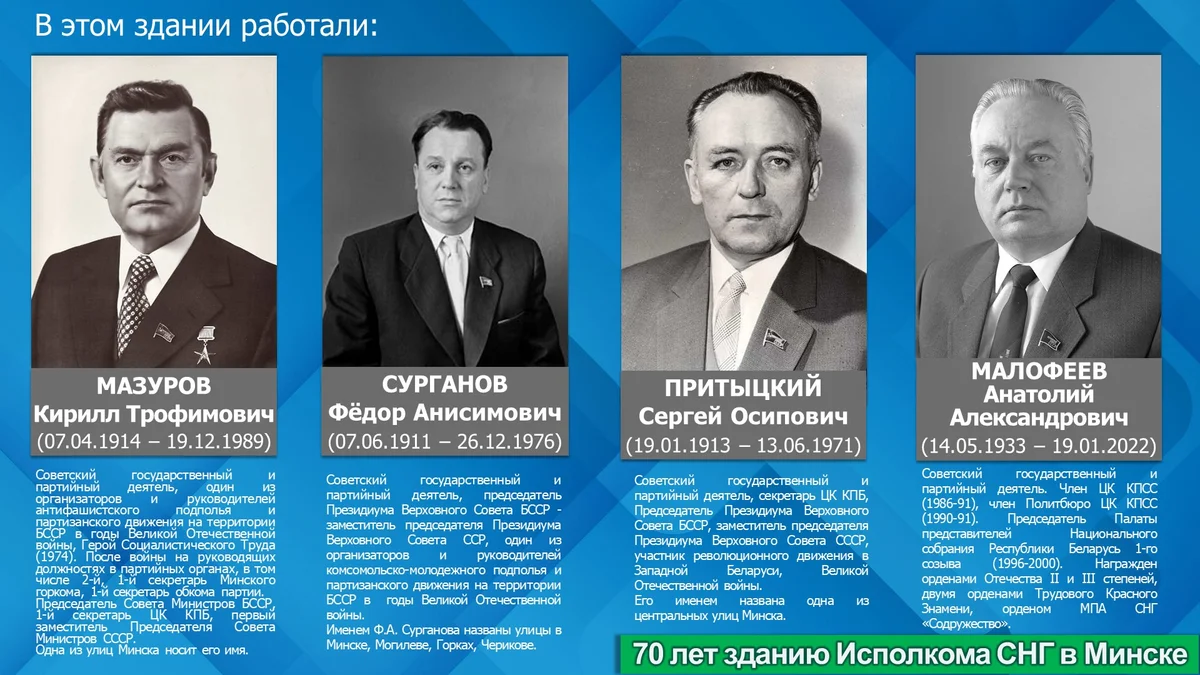
During the Soviet period, many prominent state and party figures worked in the building, after whom central streets in the Belarusian capital and other cities are named today. These include Kirill Mazurov and Fyodor Surganov, who during the war were organizers and leaders of the underground guerrilla movement, and Sergey Pritytsky, an active participant in the Belarusian resistance in Western Belarus, which was under Polish control at the time. Anatoly Malofeyev, who became Chairman of the House of Representatives of the National Assembly of the Republic of Belarus of the 1st convocation in 1996, also worked here.
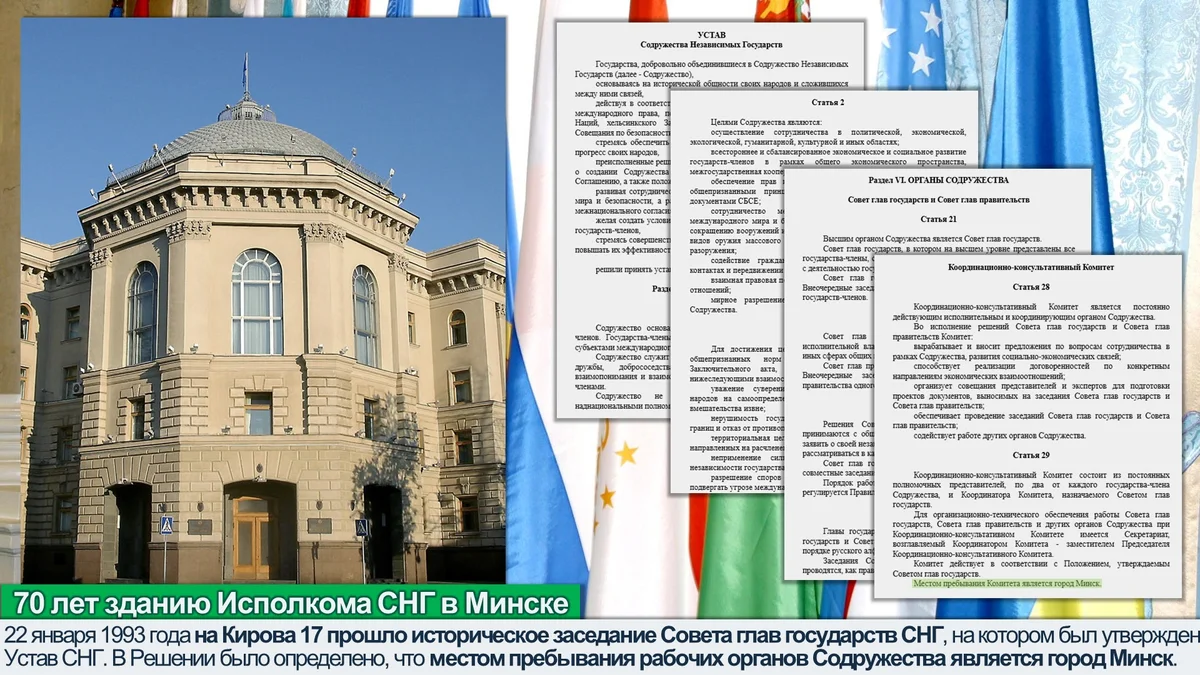
A new chapter in the building’s history began after the establishment of the CIS. On January 22, 1993, a historic meeting of the CIS Heads of State Council was held here, at which the CIS Charter was adopted. According to one of the charter provisions, Minsk was designated as the location for the working bodies of the interstate association, and earlier the Belarusian government had decided to allocate the building on Kirov Street for this purpose. Initially, the Working Group of the CIS Heads of State Council and Heads of Government Council was located here, later transformed into the CIS Executive Secretariat, which in 1999 was reorganized into the CIS Executive Committee, whose Moscow Office also operates on Sofia Embankment.
The CIS Headquarters became one of the centers of international life not only for the Belarusian capital but for the entire Commonwealth. On May 31 – June 1, 2001, meetings of the CIS Heads of State Council and the preceding meetings of the CIS Heads of Government Council and Foreign Affairs Ministers Council were held in Minsk. These events entered history under the name of the Commonwealth’s First Summit of the New Millennium, many of whose events took place precisely in the building on Kirov Street.
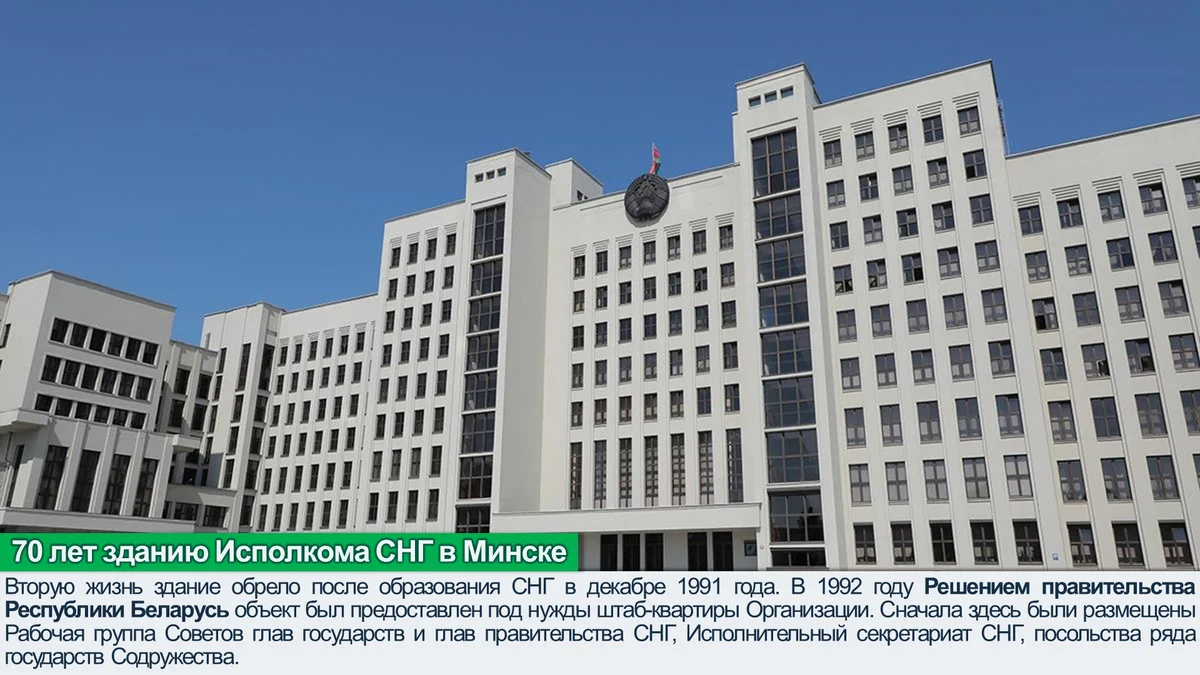
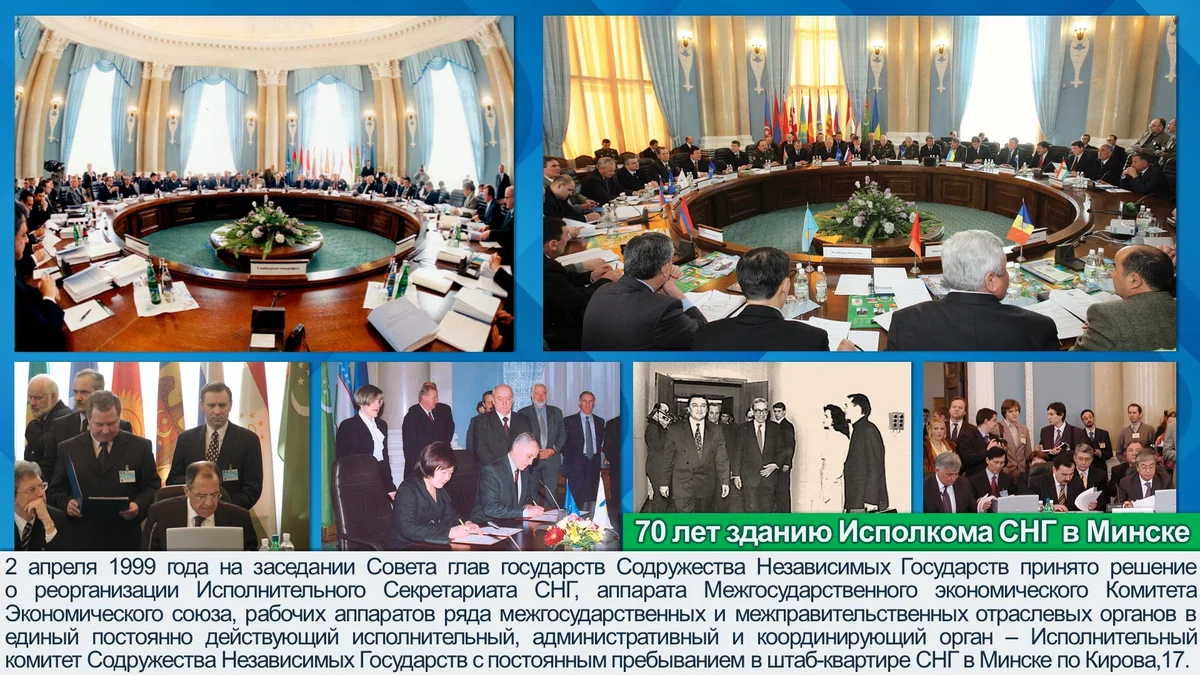
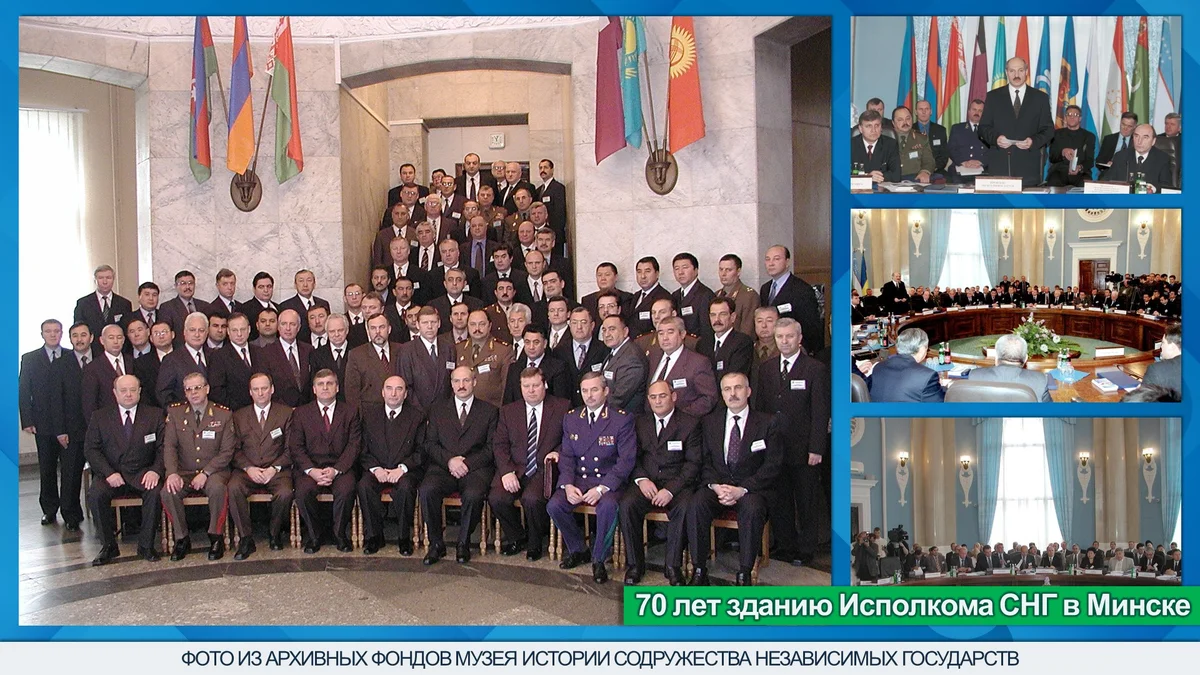
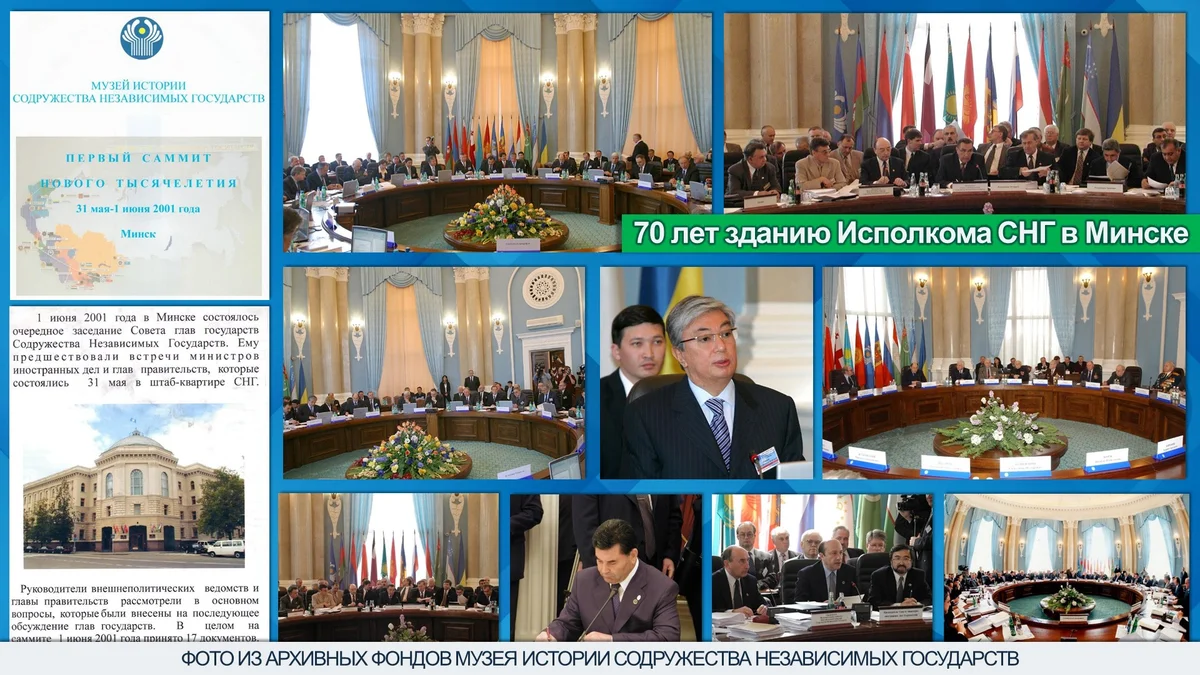
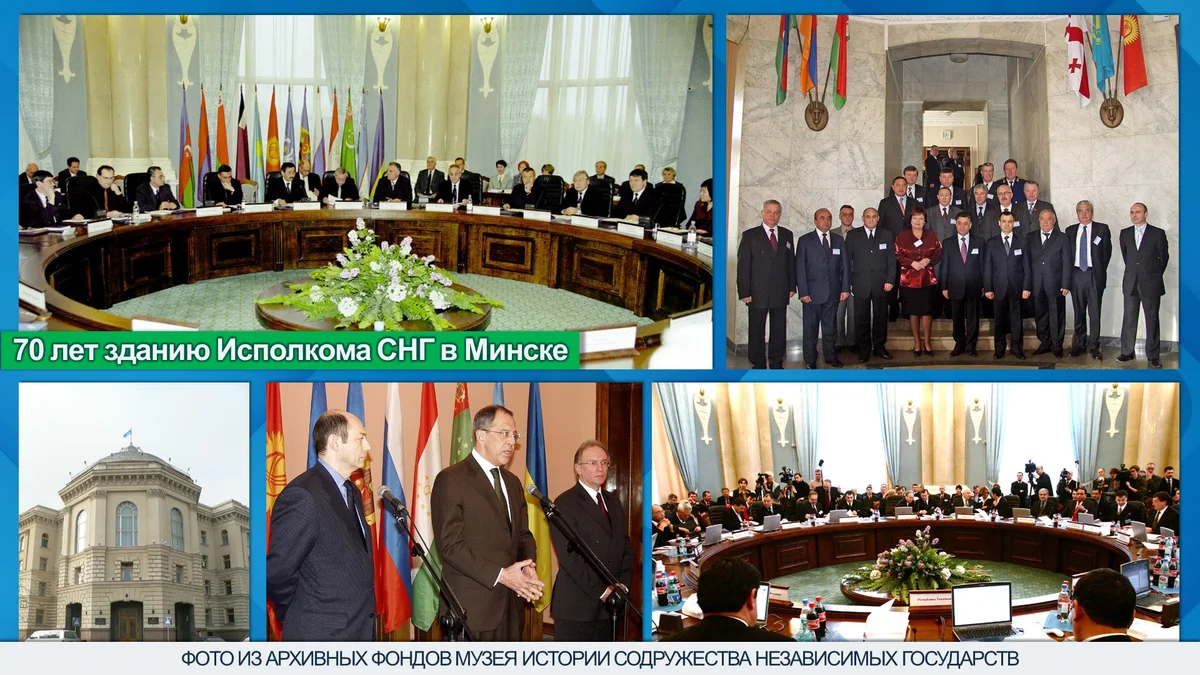
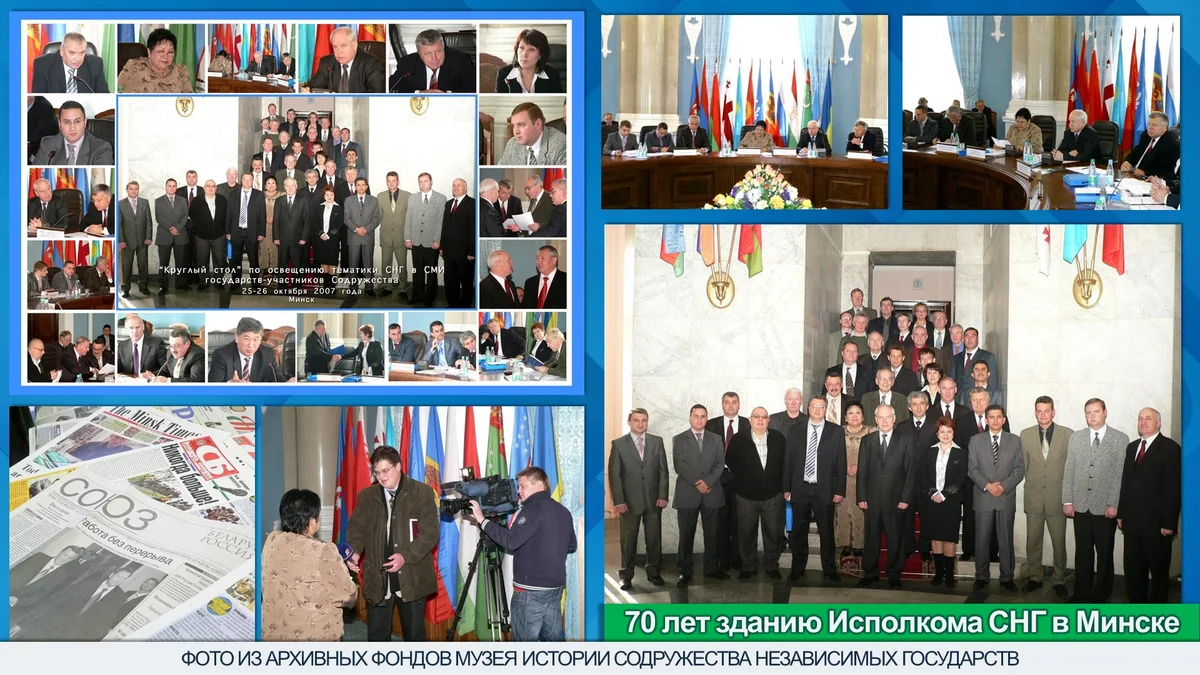
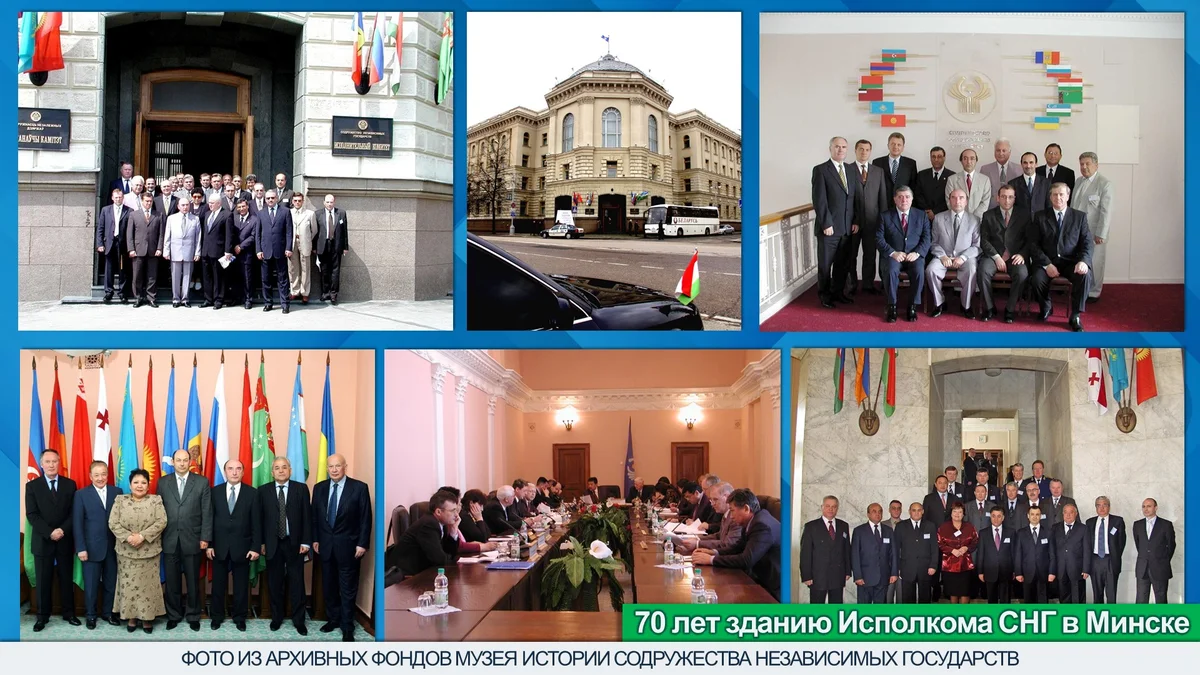
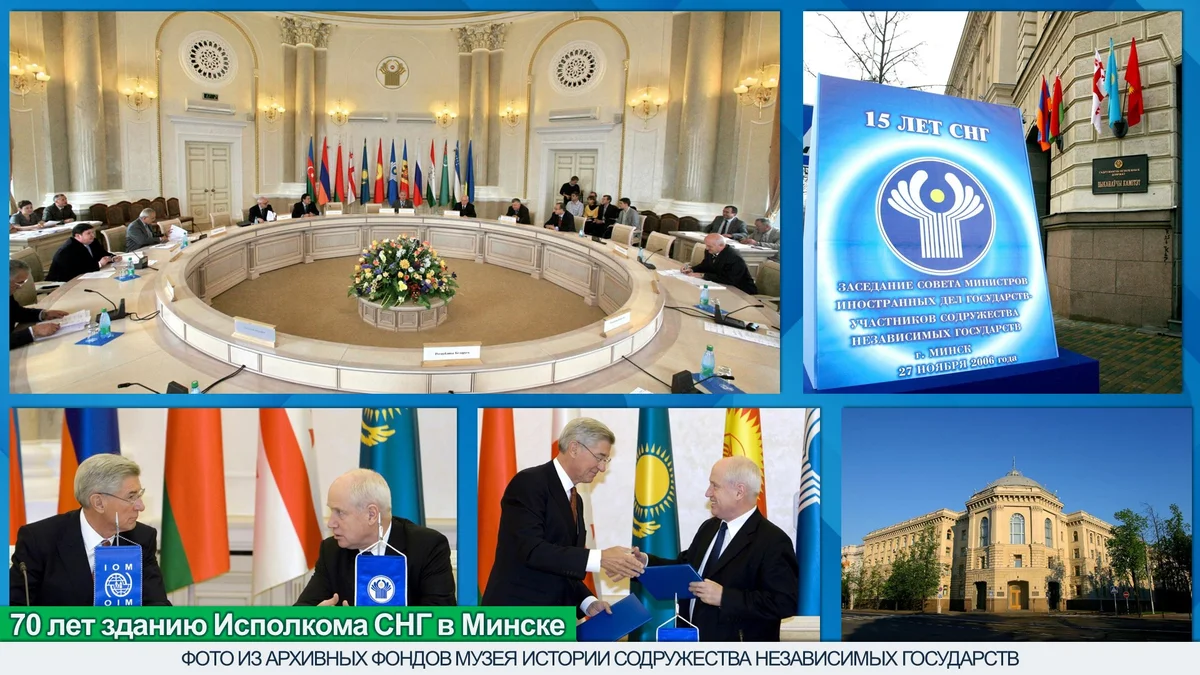
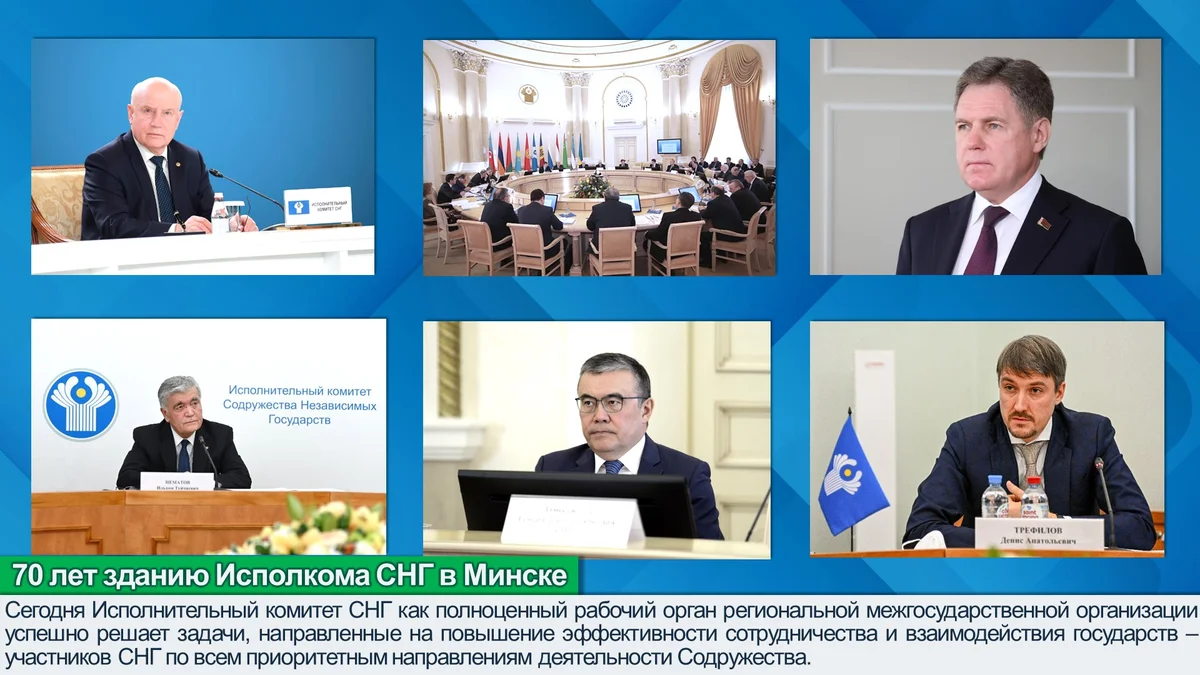
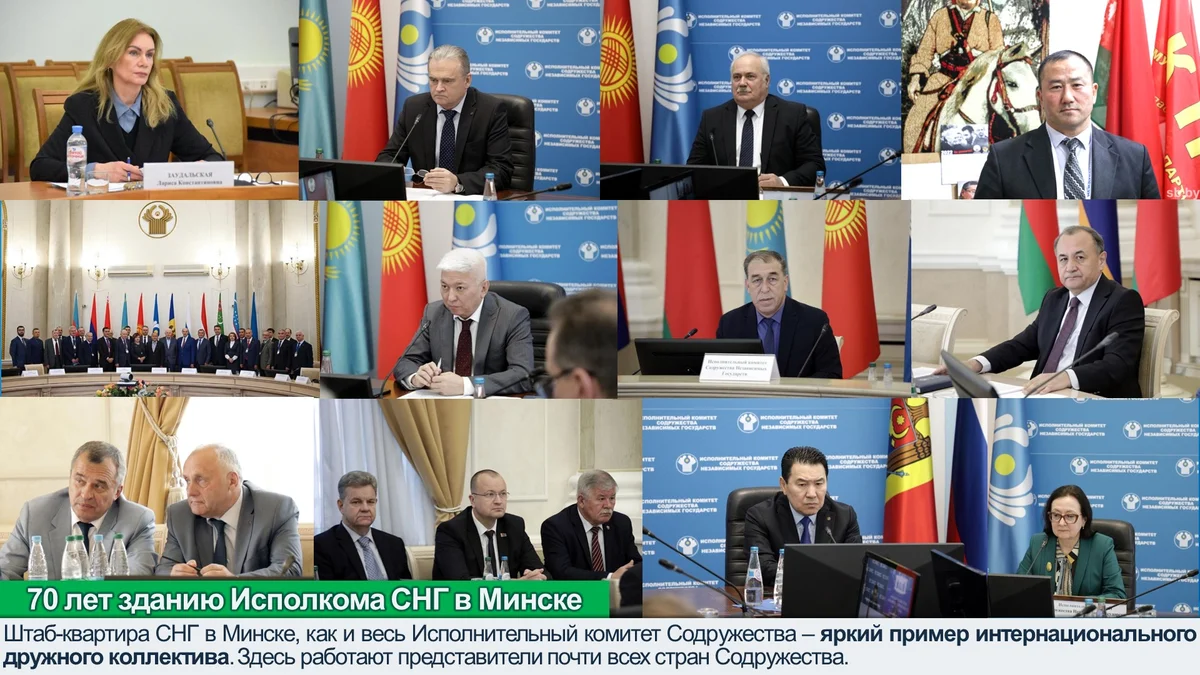
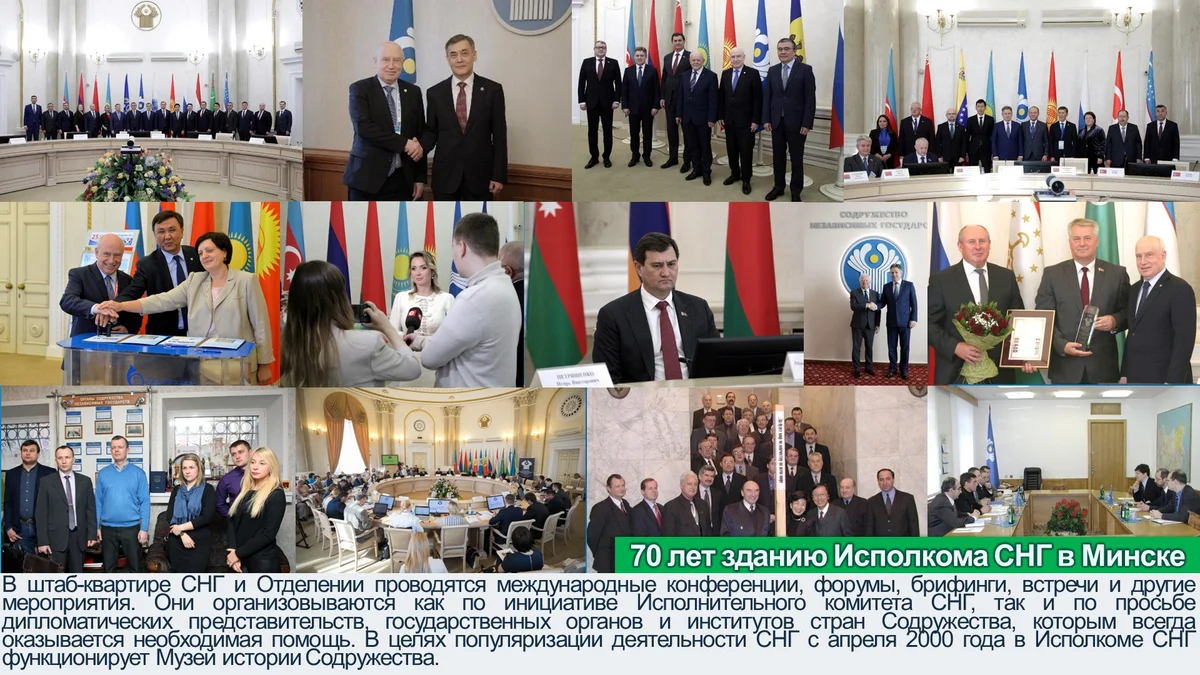
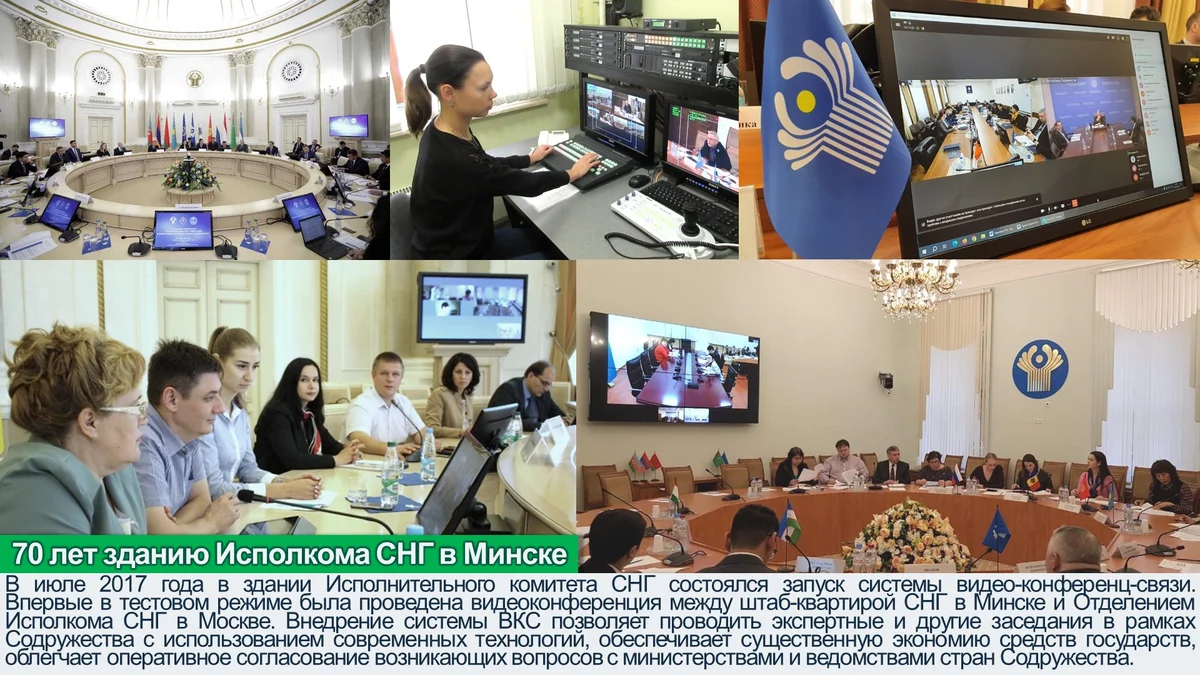
For over 30 years, numerous international conferences, forums, briefings, meetings, and other events have been held here. The staff of the CIS Executive Committee has become a friendly international family. The very atmosphere of the building fosters the development of constructive interaction, preparation and adoption of decisions designed to ensure steady growth and prosperity across the entire Commonwealth space.
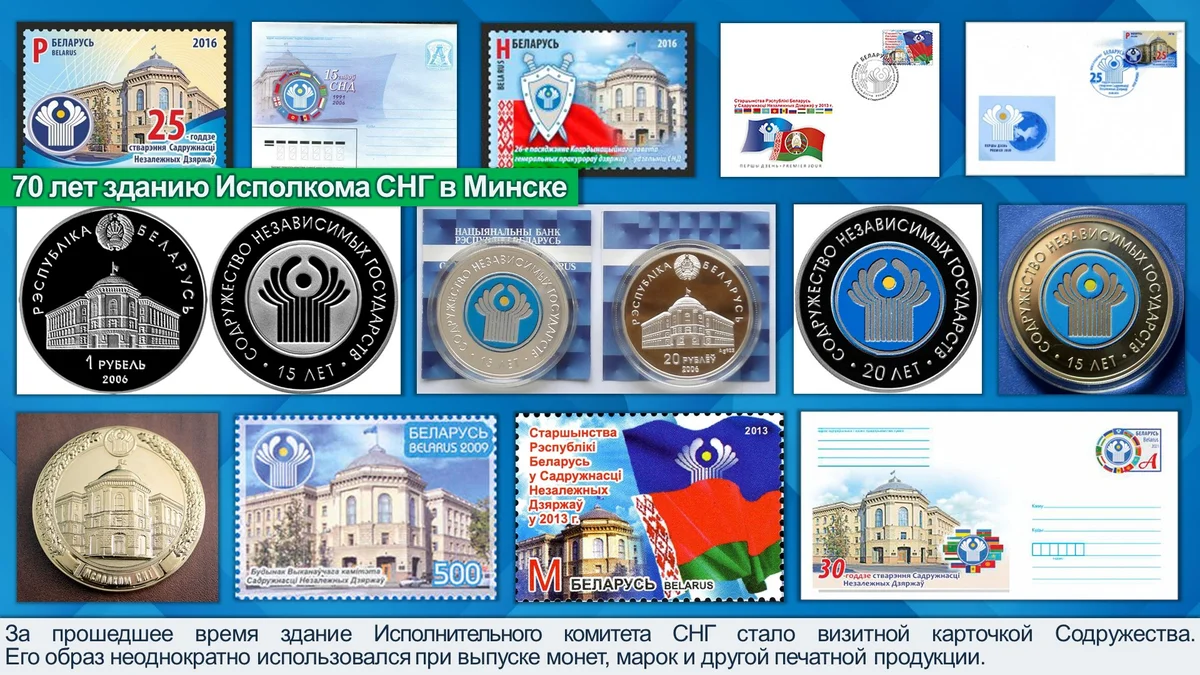
The CIS Executive Committee building has long become a landmark of the interstate association. Its image as a symbol of the Commonwealth is depicted on postage stamps, coins, and electronic and printed products dedicated to this theme.
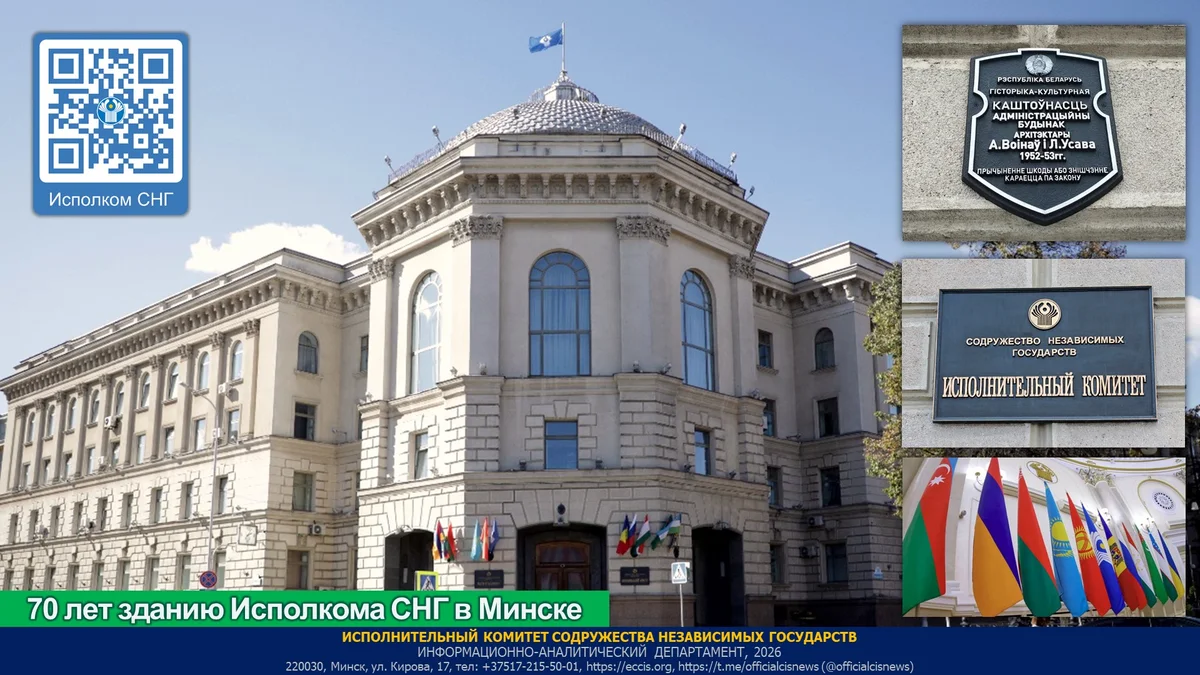
On May 14, 2007, by a decree of the Belarusian government, one of the most iconic buildings for the CIS was listed as a historical and cultural heritage site of the Republic of Belarus.